

Running a business in Australia isn’t just about sales, marketing, and growth. Behind the scenes, every company must follow strict governance rules, maintain accurate records, and meet regulatory obligations to stay compliant. Whether you’re operating a small private company or managing a growing enterprise with multiple shareholders, compliance mistakes can lead to penalties, reputational risk, and operational confusion.
That’s where a corporate secretary plays a vital role.
Many business owners ask questions like “what is a secretary of a company?” or assume that a company secretary is only responsible for basic paperwork. In reality, the secretary of a company is one of the most important people involved in managing corporate governance, documentation, and compliance in Australia.
In this detailed guide, we’ll explain the role of a corporate secretary, explore the most essential company secretary responsibilities, and help you understand when your business should consider professional company secretariat support.
What Is a Company Secretary?

Let’s start with the basics: what is a secretary of a company?
A company secretary (also called a corporate secretary) is a person or professional service provider responsible for helping a company meet its legal, administrative, and governance obligations. In Australia, the company secretary acts as a key compliance support function and works closely with directors and stakeholders to ensure the business is operating correctly under the law.
Even though the title may sound traditional, the responsibilities are highly modern and critical.
The Secretary of a Company: More Than an Admin Role
Many people think the secretary of a company handles:
- filing paperwork
- storing documents
- scheduling meetings
While these tasks may be included, the real responsibilities go much deeper, such as:
- maintaining statutory registers
- ensuring decisions are properly recorded
- keeping ASIC-related details updated
- supporting directors with governance processes
- monitoring compliance deadlines
In other words, a corporate secretary supports a company’s legal and compliance structure so leadership can focus on strategy and growth.
What Is Company Secretariat?
The term company secretariat refers to the broader function or department (or outsourced service) that manages the secretarial and governance work of a business. This can involve:
- recordkeeping
- compliance support
- board meeting documentation
- corporate filings
- governance policies and reporting
So, while a corporate secretary is the person, company secretariat is the overall system and function that helps keep the organization compliant and well-governed.
Duties and Responsibilities of a Corporate Secretary in Australia
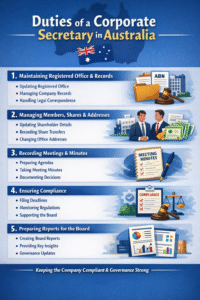
Now let’s break down the core company secretary responsibilities that matter most for Australian businesses. These responsibilities are not only about compliance—they also improve internal clarity, reduce risk, and strengthen governance.
1. Maintaining Registered Office and Company Records
One of the most fundamental responsibilities of a corporate secretary is managing the registered details and official records of the business.
Maintaining the Registered Office
In Australia, a company must have a registered office address, which is the official location for receiving legal and government correspondence. It’s not just a mailing address—it is often where formal notices are served.
A corporate secretary ensures:
- the registered office address is correctly recorded
- changes to the address are documented properly
- important correspondence is handled responsibly
Missing official communications can result in compliance delays or missed deadlines.
Maintaining Company Records
Another major part of company secretariat work is ensuring company records are accurate, secure, and accessible when needed.
This includes maintaining:
- company constitutions (if applicable)
- registers and internal governance documents
- shareholder/member records
- director and officer information
- company resolutions
Accurate company records provide clarity and reduce disputes. They also help during audits, due diligence processes, and legal reviews.
2. Managing Changes to Company Members, Shares, and Office Addresses
A company’s structure rarely stays the same forever. Businesses change as they grow—new shareholders join, shares are transferred, directors change, and office locations move.
Managing these changes properly is a key responsibility of the secretary of a company.
Changes to Members and Shareholders
When new shareholders are added or an existing shareholder exits, the corporate secretary helps ensure:
- ownership records remain accurate
- the company registers reflect updated information
- internal approvals and resolutions are properly documented
This is extremely important because incorrect shareholder records can cause confusion, disputes, and legal challenges during fundraising or business sales.
Share Transfers and Share Issues
Companies may issue shares for many reasons:
- fundraising
- rewarding employees
- ownership restructuring
A corporate secretary assists with:
- recording share issues and transfers
- tracking share classes and ownership percentages
- preparing documentation for approvals
This forms part of professional company secretariat handling and ensures company ownership stays transparent and legally sound.
Changes to Office Addresses
When a company changes:
- registered office
- principal place of business
- mailing addresses
The secretary of a company ensures changes are properly recorded and updated in necessary documents.
Even small address errors can lead to missed legal notices, delayed approvals, or miscommunication with stakeholders.
3. Recording and Documenting Meeting Discussions and Minutes
Meetings are where major decisions are made—but if those decisions aren’t recorded properly, it can create serious problems later.
That’s why preparing and documenting meeting records is one of the most important company secretary responsibilities.
Preparing the Agenda
Before a meeting, the corporate secretary often helps in:
- preparing meeting agendas
- ensuring key discussion points are included
- structuring agenda items for clarity
This makes meetings more productive and ensures nothing essential is missed.
Taking Meeting Minutes
Meeting minutes are official written records of what was discussed and decided.
A corporate secretary ensures that minutes include:
- the time and date of the meeting
- attendees and absentees
- agenda items discussed
- decisions made and resolutions passed
- action items and responsibilities
Minutes are not meant to be full transcripts. Instead, they are professional records of outcomes and decisions.
Why Minutes Matter
Properly recorded minutes help:
- protect directors by showing proper decision-making processes
- prove compliance in audits or investigations
- avoid future misunderstandings between stakeholders
- maintain transparency in corporate governance
Without documentation, even correct decisions can appear questionable or unverified later.
4. Ensuring Compliance with Policies and Procedures
Compliance is one of the biggest responsibilities of a corporate secretary in Australia. Businesses are expected to follow various regulations, reporting standards, and governance principles.
Also Read: What is an Interim Executive Director and Why Would You Want One?
A corporate secretary helps ensure compliance by:
- tracking filing deadlines
- maintaining governance documentation
- ensuring internal procedures are followed
- keeping directors informed about compliance obligations
Supporting Directors and Leadership
Directors have responsibilities and duties that require proper documentation and governance support. The corporate secretary ensures that:
- board decisions are recorded properly
- policies are updated when needed
- processes align with internal and regulatory expectations
Reducing Risk of Penalties
Non-compliance can result in:
- fines and penalties
- reputational harm
- complications during funding or audits
- legal trouble in serious cases
By having a strong company secretariat function, businesses reduce the chances of missing important deadlines or making avoidable compliance mistakes.
5. Preparing Reports for the Board
A corporate secretary doesn’t just store information—they help leadership understand it.
Board reporting is an important function that helps directors make informed decisions and stay aware of key compliance and governance matters.
Types of Reports a Corporate Secretary Supports
Depending on the company’s needs, reports may include:
- compliance status updates
- risk summaries
- governance checklists
- changes in corporate structure
- register updates and reminders
- meeting schedules and actions tracking
Why Board Reports Matter
Regular reports help the board:
- stay organized
- monitor governance responsibilities
- plan upcoming decisions
- identify risks early
- maintain accountability
This turns the company secretary role into an active governance support function, not just a passive one.
Similarities Between Corporate Secretary and General Counsel
Many business owners confuse the roles of a corporate secretary and a general counsel because both are associated with compliance, governance, and legal risk.
Let’s compare them clearly.
Where They Overlap
A corporate secretary and general counsel may both support:
- risk management
- documentation and policies
- governance structure
- legal compliance support
- board processes and formal records
How They Differ
The major difference is:
- General Counsel focuses on legal strategy, contracts, disputes, and legal advisory.
- Corporate Secretary focuses on governance execution, compliance records, board meeting support, and corporate documentation.
In many organizations, they work together. In smaller businesses, company secretariat services may cover some basic compliance structure, while external legal experts support specific legal needs.
When Should You Consider Company Secretarial Services?
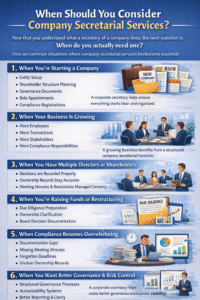
Now that you understand what a secretary of a company does, the next question is:
When do you actually need one?
Here are the most common situations where professional company secretariat services become essential:
1. When You’re Starting a Company
At the beginning, you must handle:
- entity setup
- shareholder structure planning
- governance documents
- role appointments
- compliance registrations
A corporate secretary helps ensure everything starts clean and organized.
2. When Your Business Is Growing
As your company expands, so does the complexity:
- more employees
- more transactions
- more stakeholders
- more compliance responsibilities
A growing business benefits from a structured company secretariat function that prevents paperwork chaos later.
3. When You Have Multiple Directors or Shareholders
More people involved = more decisions, approvals, and documentation.
A corporate secretary ensures:
- decisions are recorded properly
- ownership records stay accurate
- meeting minutes and resolutions are managed correctly
4. When You’re Raising Funds or Restructuring
Investors require clean documentation. If your records are incomplete or inconsistent, fundraising becomes difficult.
Company secretary responsibilities become critical in:
- due diligence preparation
- ownership clarification
- board decision documentation
5. When Compliance Becomes Overwhelming
Many business owners delay compliance tasks because they’re busy running daily operations.
If your team constantly struggles with:
- documentation gaps
- missing meeting minutes
- forgotten deadlines
- unclear ownership records
…it’s a strong sign you need professional company secretariat support.
6. When You Want Better Governance and Risk Control
Good governance is not only about avoiding penalties—it’s also about improving decision-making and business stability.
A corporate secretary helps create:
- structured governance processes
- accountability systems
- better reporting and clarity
Conclusion
So, what can a corporate secretary do for your business in Australia?
A lot more than most people expect.
A strong corporate secretary helps your business:
✅ maintain accurate records
✅ handle changes in structure properly
✅ document board decisions professionally
✅ improve compliance and reduce legal risk
✅ support leadership with reporting and governance structure
In simple words, the secretary of a company is a key pillar of corporate governance. Whether you’re a small private company or a growing organization, having professional company secretariat support keeps your business organized, compliant, and ready for growth.
If you want to build a business that scales smoothly and stays protected from compliance mistakes, investing in corporate secretarial support is one of the smartest long-term decisions you can make.
FAQs
- What is a secretary of a company?
A secretary of a company is a person responsible for managing governance, compliance, and corporate records, ensuring the business meets its legal and administrative obligations.
- What are company secretary responsibilities in Australia?
Common company secretary responsibilities include maintaining company records, recording meeting minutes, managing changes to shareholders and directors, ensuring compliance with procedures, and supporting board reporting.
- Is a corporate secretary required for all companies in Australia?
Not all companies are required to appoint a company secretary, but having one is highly beneficial for compliance, governance, and managing business growth professionally.
- What is company secretariat?
Company secretariat refers to the overall governance and administrative function that manages corporate filings, records, compliance tasks, and board-related documentation.
- How does a corporate secretary help with compliance?
A corporate secretary tracks deadlines, maintains accurate records, ensures policies are followed, and supports directors in meeting governance and regulatory obligations.
- Can a corporate secretary handle shareholder changes and share transfers?
Yes, managing changes to company members, shares, and ownership records is one of the key responsibilities of a corporate secretary.