
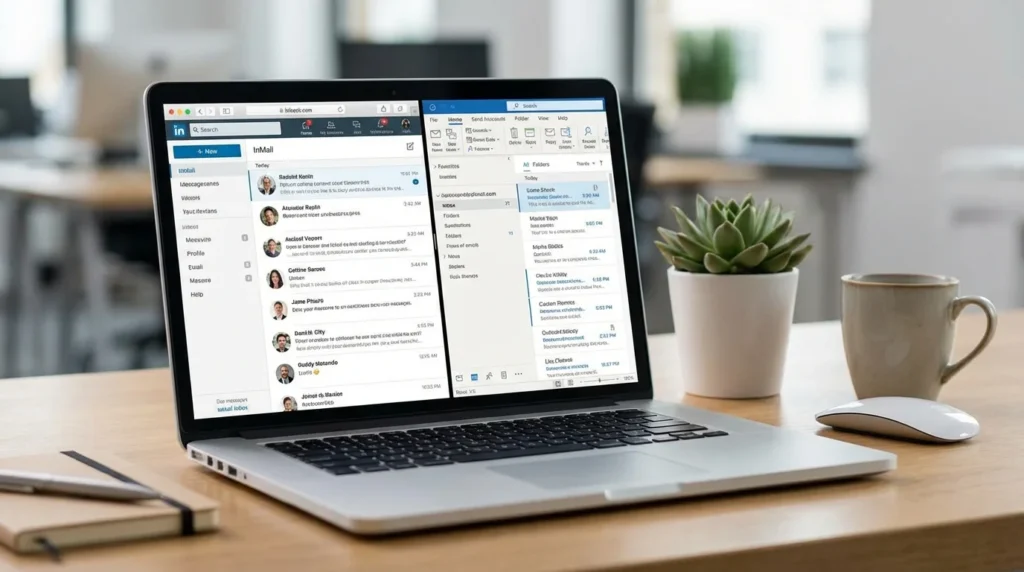
Recruitment today is highly competitive. Skilled candidates receive multiple messages every week, sometimes every day, from recruiters trying to catch their attention. Because of this, the way recruiters reach out to candidates has become just as important as the job role itself. Two of the most commonly used outreach channels are InMail and email. Both are widely used, both have clear advantages, and both also come with limitations. Choosing the right channel can directly affect response rates, candidate experience, and hiring speed. This blog compares InMail and email in detail to help recruiters understand which channel works better in different hiring situations.
What Is InMail?
InMail is a direct messaging feature that allows recruiters to contact candidates on LinkedIn without having their email address. It is designed specifically for professional communication and is widely used for recruitment and business outreach. Recruiters can send InMail messages to candidates even if they are not connected with them on the platform. This makes InMail a powerful option for reaching passive candidates who may not be actively applying for jobs.
InMail works within the LinkedIn ecosystem. Recruiters purchase subscriptions that provide a limited number of InMail credits each month. These credits are used to send messages, and in some cases, credits are returned if the recipient replies within a certain time frame. Because InMail is tied directly to professional profiles, it is often seen as a more formal and trusted communication channel.
Key Features of InMail
- Allows recruiters to message candidates without email addresses
- Uses professional profile data for context
- Operates on a credit-based system
- Provides visibility into whether messages are delivered and read
What Is Email Recruiting?
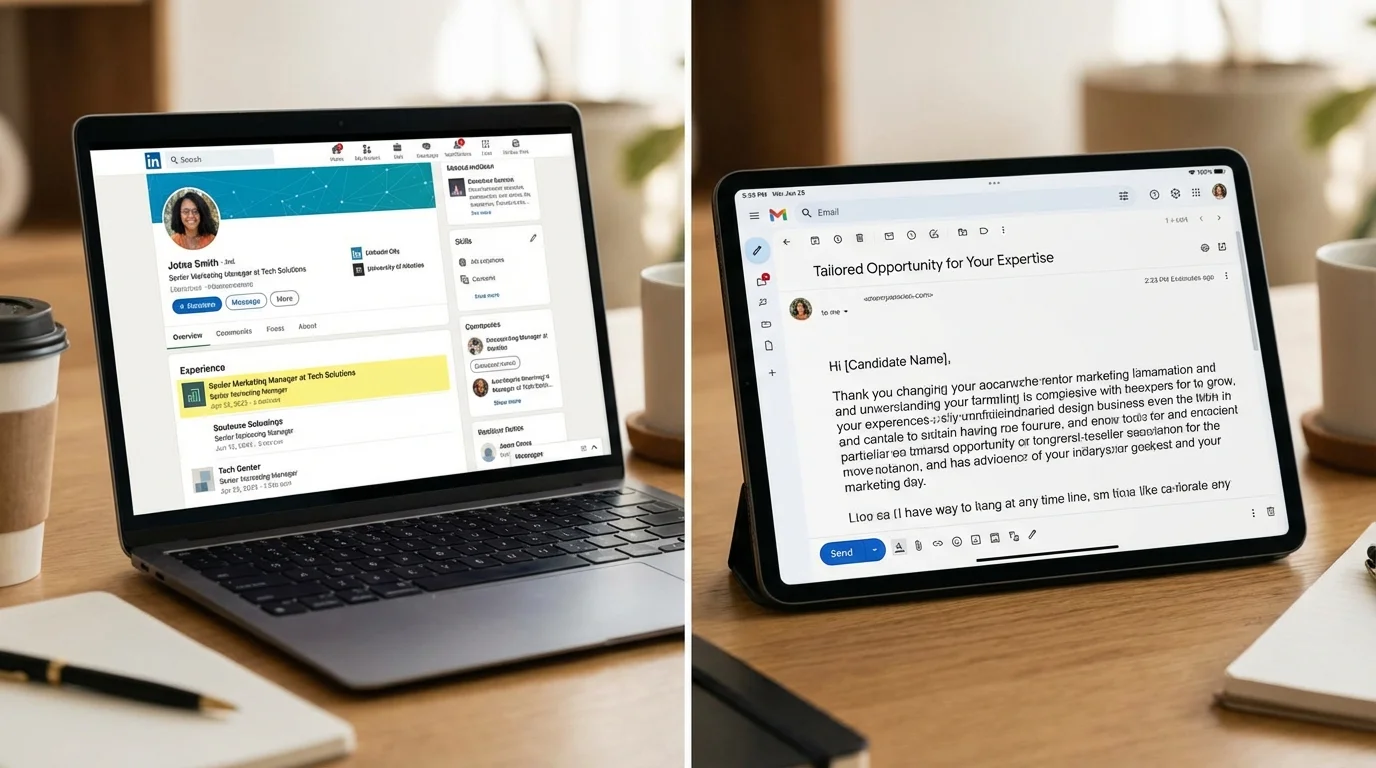
Email recruiting involves reaching out to candidates through their email addresses. These email addresses may be sourced from resumes, job applications, databases, referrals, or public information. Email is one of the oldest and most widely used communication channels in recruitment and remains relevant because of its flexibility and scalability.
Email recruiting can be used for both cold outreach and warm communication. Cold emails are sent to candidates who have not previously interacted with the recruiter, while warm emails are sent to candidates who have applied, opted in, or engaged before. Unlike InMail, email is not tied to a single platform, which gives recruiters more control over how and when they communicate.
Key Features of Email Recruiting
- Enables direct communication outside professional platforms
- Supports one-to-one and bulk outreach
- Allows rich formatting and branding
- Integrates easily with recruitment tools
InMail vs. Email: Core Differences
InMail and email differ fundamentally in how they operate and how candidates perceive them. InMail is platform-specific and exists within a professional networking environment, while email is platform-independent and part of everyday communication. InMail messages often feel more contextual because they are linked to a candidate’s professional profile. Email messages, on the other hand, offer more freedom in presentation and follow-up strategies.
Another key difference is control. InMail is governed by platform rules, limits, and credits. Email gives recruiters full control over content, frequency, and outreach scale, but also places responsibility on the recruiter for deliverability and compliance.
Reach and Candidate Accessibility

InMail Reach
InMail can only reach candidates who are active on LinkedIn. This means the audience is limited to professionals who maintain profiles and log in regularly. Messages appear directly in the LinkedIn inbox, which reduces the risk of being filtered out or lost. However, if a candidate is not active on the platform, the message may go unnoticed.
Email Reach
Email allows recruiters to reach candidates both inside and outside LinkedIn. Candidates do not need to be active on any specific platform to receive an email. This makes email more versatile, especially for reaching candidates who are not engaged on professional networks. However, email addresses can be outdated, incorrect, or abandoned, which can reduce reach.
Personalization and Context
Personalization in InMail
InMail allows recruiters to personalize messages using information from a candidate’s profile. Job titles, skills, recent activity, and shared connections provide natural context. This helps recruiters craft messages that feel relevant and targeted. However, the structure and formatting of InMail messages are limited, which can restrict how much personalization can be expressed.
Personalization in Email
Email offers far greater flexibility in personalization. Recruiters can tailor subject lines, message content, and even follow-up sequences based on candidate behavior. Emails can include links, attachments, and detailed explanations. While this allows deeper storytelling, it also requires more effort to ensure personalization feels genuine and not automated.
Response Rates and Engagement
InMail is often associated with higher visibility because messages land in a professional inbox. Candidates may be more likely to notice and open InMail messages, especially if they are active on LinkedIn. Email response rates can vary widely depending on subject lines, sender reputation, and timing.
Several factors influence engagement for both channels.
- Relevance of the role to the candidate’s background
- Clarity and brevity of the message
- Timing of outreach
- Personalization level
Neither channel guarantees responses, but relevance and value remain the most important drivers.
Cost Comparison: InMail vs. Email
Cost of InMail
InMail requires a paid LinkedIn subscription. Recruiters receive a limited number of credits each month, which caps outreach volume. This makes InMail relatively expensive on a per-message basis, especially for high-volume hiring. The cost is more justifiable when recruiting for senior or niche roles.
Cost of Email Outreach
Email itself is inexpensive, but there are associated costs. These may include email outreach tools, databases for sourcing email addresses, and technical setup. Despite these costs, email scales more easily and offers a lower cost per contact for large campaigns.
Deliverability and Message Visibility
InMail Deliverability
InMail messages are delivered directly to the recipient’s LinkedIn inbox. There are no spam filters involved, which ensures high deliverability. Visibility depends mainly on how active the candidate is on the platform.
Email Deliverability
Email deliverability depends on multiple technical factors.
- Sender reputation
- Domain health
- Spam filters
Poor setup can result in emails landing in spam or promotional folders, reducing visibility. Managing deliverability requires ongoing effort.
Automation and Scalability
InMail Automation
InMail has limited automation capabilities. Recruiters must manually manage outreach and follow-ups. Platform restrictions prevent large-scale automated messaging, which limits scalability.
Email Automation
Email supports advanced automation. Recruiters can create sequences, schedule follow-ups, and test different messages. This makes email highly scalable and suitable for volume hiring and long-term campaigns.
Compliance and Privacy Considerations
Recruiters using InMail must follow LinkedIn’s messaging policies, which are built into the platform. Email outreach must comply with regulations such as GDPR and CAN-SPAM. This includes respecting opt-outs, providing transparency, and handling candidate data responsibly. Email gives more freedom, but also more legal responsibility.
Employer Branding Impact
InMail and Employer Branding
InMail benefits from LinkedIn’s professional environment. Messages often feel credible and trustworthy. However, branding options are limited, and recruiters have less control over visual identity and storytelling.
Email and Employer Branding
Email allows recruiters to fully express employer brand. Custom signatures, tone of voice, and messaging style can be aligned with company culture. This makes email effective for building long-term relationships with candidates.
When Should Recruiters Use InMail?
InMail is best suited for targeted hiring situations where quality matters more than quantity.
- Senior leadership roles
- Niche or hard-to-find skills
- Candidates without accessible email addresses
- Personalized, high-touch outreach
When Should Recruiters Use Email?
Email works well when scale and flexibility are required.
- High-volume hiring
- Campus and entry-level recruitment
- Talent nurturing over time
- Employer branding campaigns
InMail vs. Email: Pros and Cons Summary
Pros and Cons of InMail
- High visibility in a professional environment
- Strong context through profiles
- Limited volume and higher cost
Pros and Cons of Email
- High scalability and low cost
- Greater control over messaging
- Deliverability and compliance challenges
InMail vs. Email: Which Is Better for Recruiters?
There is no single answer to which channel is better. The right choice depends on hiring goals, role type, budget, and urgency. InMail excels in targeted, relationship-driven hiring, while email performs better for scalable and long-term outreach. Many recruiters achieve the best results by combining both channels strategically.
Best Practices for Recruiters Using Both Channels
- Start with InMail for highly relevant candidates
- Use email for follow-ups or broader outreach
- Keep messaging consistent across channels
- Track responses and adjust strategy
Conclusion
InMail and email are both valuable tools for recruiters. Each channel serves a different purpose and works best in specific hiring scenarios. Understanding their strengths and limitations allows recruiters to choose the right approach for each role. Rather than choosing one over the other, successful recruiters often use both channels thoughtfully to improve candidate engagement and hiring outcomes.