

Corporate culture is one of the most important factors that shape how a company operates. It influences how employees interact, how decisions are made, and how the organization presents itself to customers and stakeholders. A strong corporate culture helps create a positive work environment where employees feel motivated, respected, and aligned with the company’s mission.
In modern organizations, corporate culture plays a major role in employee satisfaction, productivity, and long-term business success. Companies that build healthy workplace cultures often experience better collaboration, stronger innovation, and higher employee retention. On the other hand, organizations with weak or toxic cultures frequently struggle with low morale and high turnover.
This blog explains what corporate culture is, why it matters, the different types of corporate culture found in organizations, real examples from successful companies, and practical ways businesses can improve their workplace culture.
What Is Corporate Culture?
Corporate culture refers to the shared values, behaviors, beliefs, and practices that shape how employees work together within an organization. It reflects the personality of a company and influences how employees behave, communicate, and make decisions.
Corporate culture develops over time and is shaped by leadership style, company policies, workplace environment, and the attitudes of employees. It affects both internal operations and external perceptions of a business.
Key elements that shape corporate culture include:
- Leadership style Leaders influence workplace behavior through their decisions, management style, and communication with employees.
- Company values and mission A company’s mission and values guide how employees approach their work and interact with colleagues and customers.
- Communication style The way information is shared within an organization affects transparency, trust, and collaboration.
- Work environment Physical workspace, remote work policies, and workplace flexibility influence employee experience.
- Employee recognition and development Organizations that reward performance and support professional growth often develop stronger cultures.
Why Corporate Culture Matters

Corporate culture has a direct impact on how employees perform and how organizations grow. A strong culture helps align employees with company goals and creates a sense of purpose in the workplace.
- Impact on employee engagement and motivation Employees who feel valued and supported are more likely to stay motivated and committed to their work.
- Influence on company reputation and employer branding Companies known for positive workplace cultures often attract skilled professionals and build strong employer brands.
- Role in attracting and retaining talent Many job seekers consider workplace culture when choosing an employer. Organizations with healthy cultures tend to retain employees longer.
- Connection between strong culture and business performance When employees work in supportive environments, they collaborate more effectively and contribute to higher productivity.
- Effect on teamwork, innovation, and productivity A positive culture encourages employees to share ideas, solve problems together, and improve processes.
Key Elements of a Strong Corporate Culture

A strong corporate culture is built on several foundational elements that guide how employees interact and how organizations operate.
1. Clear Company Values
Company values represent the beliefs and principles that guide an organization’s actions and decisions.
- Values help employees understand what the company stands for and what behaviors are expected in the workplace.
- Clear values align employees with organizational goals and help maintain consistency in decision-making.
- When companies communicate their values effectively, employees are more likely to feel connected to the organization’s mission.
2. Transparent Communication
Open and honest communication is essential for building trust within organizations.
- Transparent communication ensures employees understand company goals, strategies, and expectations.
- Open discussions help reduce misunderstandings and workplace conflicts.
- Encouraging feedback allows employees to share ideas and contribute to improvements.
3. Leadership Behavior
Leadership plays a crucial role in shaping workplace culture.
- Leaders set the tone for workplace behavior through their actions and decisions.
- When leaders demonstrate integrity, accountability, and respect, employees often follow those examples.
- Strong leadership helps build trust and creates a supportive work environment.
4. Employee Recognition
Recognizing employee contributions is an important part of maintaining motivation and engagement.
- Recognition programs reward employees for their achievements and dedication.
- Appreciation encourages employees to maintain high performance.
- Positive reinforcement strengthens loyalty and commitment to the organization.
5. Opportunities for Growth
Professional development helps employees improve their skills and advance their careers.
- Training programs support skill development and knowledge expansion.
- Mentorship opportunities allow experienced employees to guide others.
- Career growth opportunities encourage employees to stay with the organization longer.
Types of Corporate Culture
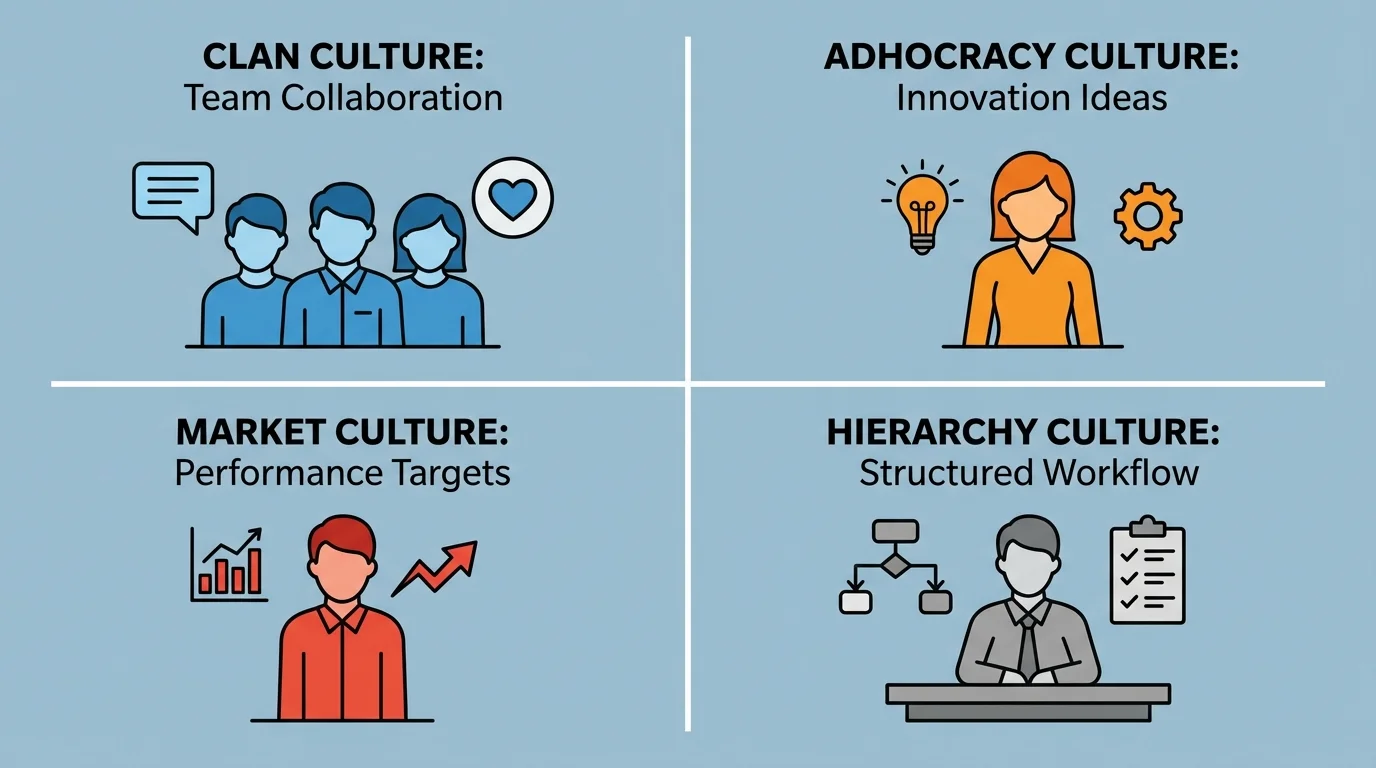
Organizations typically develop different types of corporate culture depending on their goals, leadership style, and industry. Four commonly recognized models help explain how workplace cultures operate.
1. Clan Culture (Collaborative Culture)
Clan culture focuses on collaboration, teamwork, and employee relationships.
- The workplace often feels like a supportive community where employees work closely together.
- Leaders act as mentors who guide and support their teams.
- Employee development and participation are important priorities.
- Companies with clan cultures emphasize trust, collaboration, and shared goals.
2. Adhocracy Culture (Innovative Culture)
Adhocracy culture encourages creativity, experimentation, and innovation.
- Employees are encouraged to take risks and develop new ideas.
- Organizations focus on adaptability and continuous improvement.
- Decision-making is often flexible and fast.
- This culture is common in technology companies, startups, and research-driven organizations.
3. Market Culture (Competitive Culture)
Market culture focuses on achieving results and meeting performance goals.
- Organizations prioritize productivity, competitiveness, and customer satisfaction.
- Employees are expected to meet targets and contribute to measurable outcomes.
- Performance metrics and results are key indicators of success.
- Companies operating in highly competitive industries often adopt this culture.
4. Hierarchy Culture (Structured Culture)
Hierarchy culture emphasizes stability, structure, and clear procedures.
- Organizations follow well-defined rules and processes.
- Leadership structures and responsibilities are clearly defined.
- Efficiency and consistency are important priorities.
- This type of culture is common in large corporations, government institutions, and traditional organizations.
Corporate Culture Examples from Successful Companies
Many successful organizations demonstrate how strong workplace cultures contribute to growth and innovation.
Example 1: Innovation-Driven Culture
Some companies build cultures focused on creativity and experimentation.
- Employees are encouraged to explore new ideas and develop innovative solutions.
- Organizations invest in research, product development, and experimentation.
- Innovation-driven cultures help companies stay competitive in rapidly changing markets.
Example 2: Employee-Focused Culture
Organizations that prioritize employee well-being often create supportive workplaces.
- Companies offer flexible work arrangements and wellness programs.
- Leadership encourages work-life balance and professional development.
- Employees feel valued and supported, which improves satisfaction and retention.
Example 3: Customer-Centric Culture
Customer-focused companies design their culture around delivering exceptional customer experiences.
- Employees are trained to prioritize customer needs.
- Feedback from customers is used to improve products and services.
- Every department works toward improving customer satisfaction.
Example 4: Performance-Driven Culture
Some organizations build cultures that reward high performance and achievement.
- Employees are evaluated based on measurable outcomes.
- Incentive programs encourage productivity and results.
- Teams work toward meeting targets and improving efficiency.
Example 5: Remote-Friendly Culture
Modern companies increasingly support remote and hybrid work environments.
- Organizations provide digital tools for collaboration and communication.
- Employees have flexibility in where and how they work.
- Remote-friendly cultures focus on productivity, trust, and accountability.
Signs of a Healthy Corporate Culture
Healthy corporate cultures create environments where employees feel motivated and supported.
- Employees feel valued and respected by leadership and colleagues
- Low employee turnover indicates satisfaction and stability
- High levels of employee engagement and productivity
- Open communication and constructive feedback across teams
- Strong collaboration and teamwork among employees
Signs of a Toxic Corporate Culture
A toxic corporate culture can negatively impact employee morale and business performance.
- Poor communication from leadership
- Lack of recognition or appreciation for employee contributions
- High employee turnover and dissatisfaction
- Frequent workplace conflicts and stressful environments
- Lack of trust between management and employees
How to Improve Corporate Culture
Organizations can strengthen their workplace culture through clear strategies and consistent leadership.
1. Define and Communicate Company Values
Clearly defined values help guide employee behavior and decision-making.
- Organizations should communicate their mission and values regularly.
- Employees should understand how their work contributes to company goals.
2. Hire People Who Fit the Culture
Recruitment plays a key role in maintaining a positive culture.
- Hiring processes should evaluate both skills and cultural alignment.
- Employees who share company values often integrate more easily into teams.
3. Encourage Open Communication
Effective communication builds trust and improves collaboration.
- Organizations should create channels for employee feedback.
- Open discussions help identify issues and opportunities for improvement.
4. Recognize and Reward Employees
Recognition programs encourage motivation and loyalty.
- Companies can implement awards, bonuses, or appreciation initiatives.
- Acknowledging achievements strengthens employee engagement.
5. Support Employee Development
Continuous learning helps employees improve their skills and remain motivated.
- Training programs support professional growth.
- Organizations can provide workshops, mentorship, and career development opportunities.
6. Promote Work-Life Balance
Balanced work environments help employees maintain productivity and well-being.
- Flexible schedules support personal and professional responsibilities.
- Remote or hybrid work options improve employee satisfaction.
7. Lead by Example
Leadership behavior strongly influences workplace culture.
- Leaders should demonstrate the values they expect from employees.
- Consistent leadership actions build trust and credibility.
Steps to Build a Strong Corporate Culture
Organizations can follow a structured process to develop and maintain a strong corporate culture.
- Assess the current culture Organizations should evaluate existing workplace practices, employee feedback, and leadership behavior.
- Identify cultural goals Companies should determine the type of culture they want to build based on business objectives.
- Involve employees in culture-building Employees should participate in discussions and initiatives that shape workplace culture.
- Implement changes gradually Cultural improvements require consistent actions and gradual adjustments over time.
- Measure culture improvements regularly Organizations can monitor employee engagement, satisfaction, and productivity to evaluate cultural progress.
Benefits of Improving Corporate Culture
Improving corporate culture can produce significant long-term advantages for organizations.
- Higher employee satisfaction and morale
- Increased productivity and innovation
- Stronger teamwork and collaboration
- Improved employer reputation and talent attraction
- Sustainable business growth and long-term success
Conclusion
Corporate culture plays a critical role in shaping how organizations operate and how employees experience the workplace. A strong culture aligns employees with company values, improves collaboration, and supports long-term business success. Companies that actively build and maintain positive workplace cultures often benefit from higher employee engagement, improved productivity, and stronger employer reputations.
By understanding the different types of corporate culture and implementing strategies to improve workplace environments, organizations can create supportive, productive, and innovative teams. Developing a strong corporate culture requires consistent leadership, clear communication, and a commitment to continuous improvement.