

Human Resources has moved beyond administrative tasks and manual decision-making. Today, HR teams are expected to support business goals, improve employee experience, and make informed workforce decisions. This shift has increased the need for data-backed insights rather than relying only on intuition or past experience.
HR analytics helps organizations understand what is happening in their workforce, why it is happening, and what actions can improve outcomes. In this blog, you will learn what HR analytics is, how it works, its types, benefits, use cases, challenges, and best practices for successful implementation.
What Is HR Analytics?
HR analytics is the practice of collecting, analyzing, and interpreting human resource data to improve workforce-related decisions. It focuses on using measurable data to understand employee behavior, performance, and organizational trends.
Unlike basic HR reporting, which only presents historical data, HR analytics goes deeper by identifying patterns and relationships within the data. It helps HR leaders make informed decisions that support both employees and business objectives.
HR analytics plays a key role in modern organizations by:
- Supporting strategic workforce planning
- Improving employee experience and engagement
- Aligning HR initiatives with business performance
Why HR Analytics Matters in Today’s Workplace

The modern workplace is more complex than ever. Organizations manage diverse teams, remote employees, and changing skill requirements. In such an environment, decision-making based only on assumptions can lead to inefficiencies.
HR analytics matters because it enables evidence-based decision-making. It helps HR teams understand workforce challenges and evaluate the impact of HR policies.
Key reasons HR analytics is important include:
- Growing need for objective and measurable HR decisions
- Increased focus on employee performance and retention
- Stronger alignment between HR strategy and business goals
How HR Analytics Works

HR analytics follows a structured process that turns raw employee data into actionable insights. Each step ensures that decisions are based on accurate and meaningful information.
The HR analytics process typically includes:
- Collecting data from HR systems such as HRMS, ATS, payroll systems, and employee surveys
- Cleaning and organizing data to ensure accuracy and consistency
- Analyzing data to identify patterns, trends, and relationships
- Interpreting results to support HR decisions and strategies
This process allows HR teams to move from data collection to informed action.
Types of HR Analytics
1. Descriptive HR Analytics
Descriptive HR analytics focuses on understanding what has already happened within the organization. It uses historical data to summarize workforce trends.
It is commonly used to:
- Track employee headcount changes
- Measure turnover and absenteeism
- Monitor hiring and training activities
This type of analytics provides a clear picture of past HR performance.
2. Diagnostic HR Analytics
Diagnostic HR analytics helps explain why certain outcomes occurred. It examines relationships between variables to identify underlying causes of HR issues.
It is used to:
- Identify reasons for high employee turnover
- Analyze performance gaps between teams
- Understand factors affecting employee engagement
This approach supports root-cause analysis and problem-solving.
3. Predictive HR Analytics
Predictive HR analytics focuses on forecasting future outcomes based on historical data patterns. It uses statistical methods to estimate what may happen next.
Common applications include:
- Predicting employee attrition risks
- Forecasting hiring needs
- Anticipating future skill requirements
Predictive analytics helps organizations prepare for future workforce challenges.
4. Prescriptive HR Analytics
Prescriptive HR analytics goes one step further by recommending actions based on data insights. It helps HR leaders decide what should be done to achieve desired outcomes.
It supports:
- Optimizing recruitment strategies
- Improving retention plans
- Enhancing workforce planning decisions
This type of analytics enables data-driven action planning.
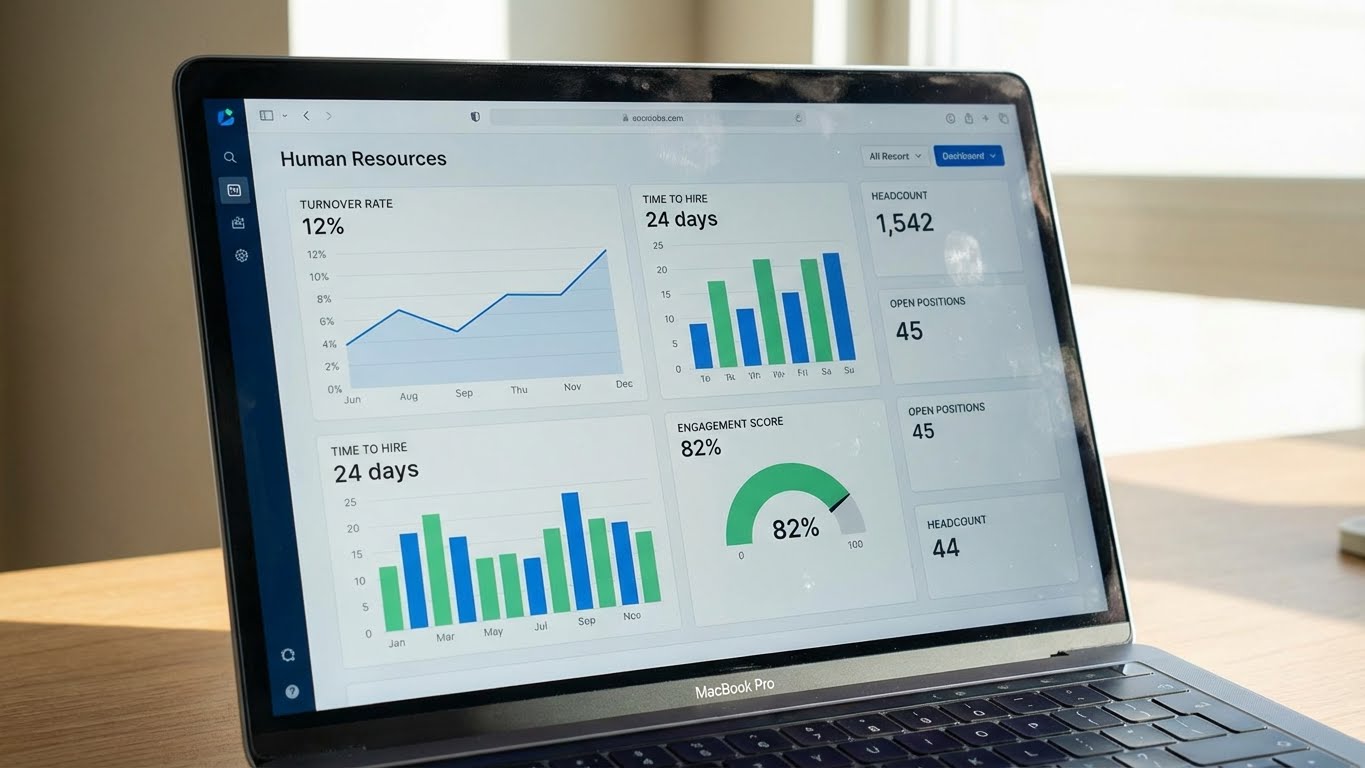
Common HR Analytics Metrics and KPIs

HR analytics relies on specific metrics to measure workforce performance and HR effectiveness. These metrics help track progress and identify improvement areas.
Common HR metrics include:
- Employee turnover rate
- Time to hire
- Cost per hire
- Employee engagement scores
- Absenteeism rate
- Training effectiveness metrics
These KPIs provide measurable insights into HR processes and employee behavior.
Benefits of HR Analytics

HR analytics offers multiple benefits that improve both HR operations and overall business performance. By using data-driven insights, organizations can make better workforce decisions.
Key benefits include:
- Improved accuracy and quality of HR decisions
- Better talent acquisition and employee retention
- Increased employee engagement and productivity
- Reduced HR costs and operational inefficiencies
- Stronger alignment between HR initiatives and business objectives
These benefits make HR analytics a valuable tool for modern organizations.
Use Cases of HR Analytics in HR Functions
1. Recruitment and Hiring
HR analytics improves recruitment by evaluating hiring processes and candidate quality. It helps identify which sources and methods deliver the best results.
Use cases include:
- Assessing candidate success rates
- Reducing time-to-hire
- Improving hiring process efficiency
2. Employee Performance Management
Analytics helps track and evaluate employee performance over time. It provides objective insights into performance trends.
Use cases include:
- Identifying high-performing employees
- Detecting performance gaps
- Supporting fair performance evaluations
3. Employee Retention and Attrition
HR analytics plays a key role in understanding and managing employee turnover.
Use cases include:
- Identifying factors contributing to attrition
- Predicting retention risks
- Supporting targeted retention strategies
4. Learning and Development
Analytics helps measure the effectiveness of training programs and identify skill gaps.
Use cases include:
- Evaluating training outcomes
- Identifying future skill needs
- Improving learning investments
5. Workforce Planning
HR analytics supports long-term workforce planning and resource management.
Use cases include:
- Forecasting workforce requirements
- Planning headcount and staffing levels
- Optimizing resource allocation
Tools and Software Used for HR Analytics
Organizations use various tools to collect, analyze, and visualize HR data. These tools support accurate and efficient analytics processes.
Common HR analytics tools include:
- HR analytics platforms and dashboards
- HRMS and ATS with built-in analytics features
- Data visualization and reporting tools
- AI-powered analytics and automation solutions
These tools help HR teams convert data into actionable insights.
Challenges in Implementing HR Analytics
While HR analytics offers significant value, organizations may face challenges during implementation.
Common challenges include:
- Poor data quality or inconsistent data sources
- Lack of analytical skills within HR teams
- Resistance to data-driven decision-making
- Data privacy, security, and compliance concerns
Addressing these challenges is essential for successful adoption.
Best Practices for Successful HR Analytics
Following best practices helps organizations maximize the impact of HR analytics and avoid common pitfalls.
Best practices include:
- Defining clear HR and business objectives before analysis
- Focusing on relevant metrics instead of collecting excessive data
- Ensuring data accuracy, consistency, and reliability
- Building analytics skills within HR teams
- Presenting insights in a clear and actionable format
- Maintaining ethical and compliant use of employee data
These practices support effective and responsible HR analytics.
HR Analytics vs People Analytics
HR analytics focuses primarily on HR processes such as hiring, performance, and retention. People analytics takes a broader approach by analyzing workforce data in relation to overall business performance.
Key differences include:
- HR analytics centers on HR functions and metrics
- People analytics connects workforce insights with business outcomes
- People analytics often involves cross-functional data analysis
Organizations may use both approaches depending on their goals.
Conclusion
HR analytics has become an essential part of modern human resource management. It enables organizations to understand their workforce, make informed decisions, and align HR strategies with business goals.
By understanding the types of HR analytics, its benefits, common use cases, and best practices, organizations can adopt a structured and effective approach to workforce analytics. As workplaces continue to evolve, HR analytics will remain a critical tool for building smarter, more resilient organizations.