

Objectives and Key Results (OKRs) are a widely used goal-setting framework that helps organizations clearly define what they want to achieve and how they will measure success. In a business environment where priorities change quickly and teams often work across functions, OKRs bring focus, clarity, and alignment.
By clearly stating objectives and linking them to measurable results, OKRs ensure that everyone understands what matters most and how progress will be evaluated. This blog explains OKRs in detail, their components, why they are important, how they compare with other frameworks, and how they can be used effectively at company, team, and individual levels.
What Are Objectives and Key Results (OKRs)?
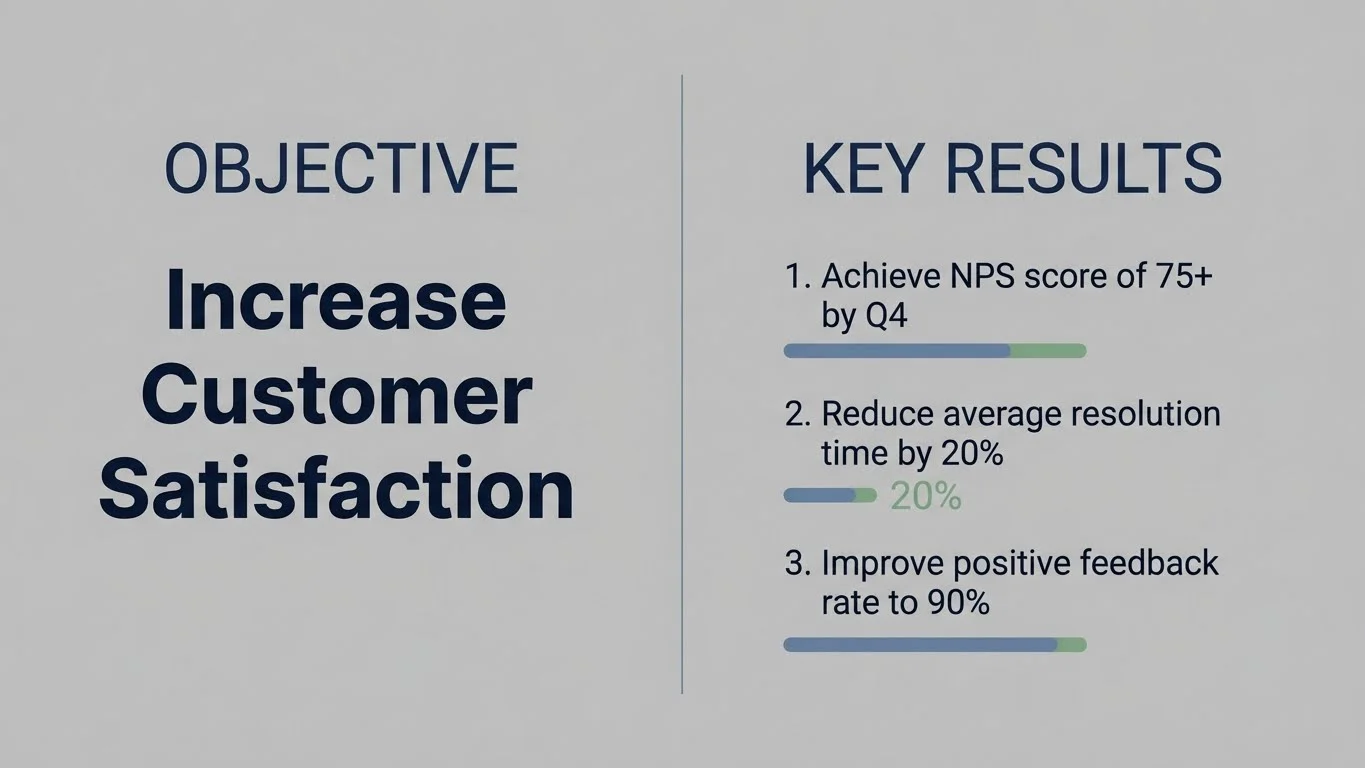
Objectives and Key Results (OKRs) are a structured goal-setting method used to define goals and track outcomes. The framework consists of two parts: objectives, which describe what you want to achieve, and key results, which define how you will measure success.
An objective is qualitative and directional. It sets the vision or intent. Key results are quantitative and measurable. They indicate whether the objective has been achieved or not. Together, they ensure goals are not vague and progress can be clearly evaluated.
Key characteristics of OKRs include:
- Clear goals with a defined purpose
- Measurable outcomes tied to each goal
- A fixed time frame, usually quarterly or annually
Key Components of OKRs
Objectives
Objectives describe the desired outcome or direction. They are meant to be inspiring and easy to understand so that teams feel motivated to work toward them. Objectives do not include numbers or metrics; instead, they communicate intent and focus.
A strong objective is:
- Clear and concise
- Action-oriented and inspirational
- Focused on outcomes rather than tasks
Objectives answer one key question: What do we want to achieve?
Key Results
Key results define how success will be measured. They are specific, measurable, and time-bound. Each objective usually has two to five key results that collectively show whether the objective has been met.
Effective key results:
- Are measurable and objective
- Have a clear deadline
- Focus on results, not activities
Key results answer the question: How will we know we’ve achieved the objective?
How OKRs Work
OKRs work in cycles, most commonly quarterly. At the beginning of a cycle, objectives and key results are defined. Progress is tracked regularly, and at the end of the cycle, results are reviewed and scored.
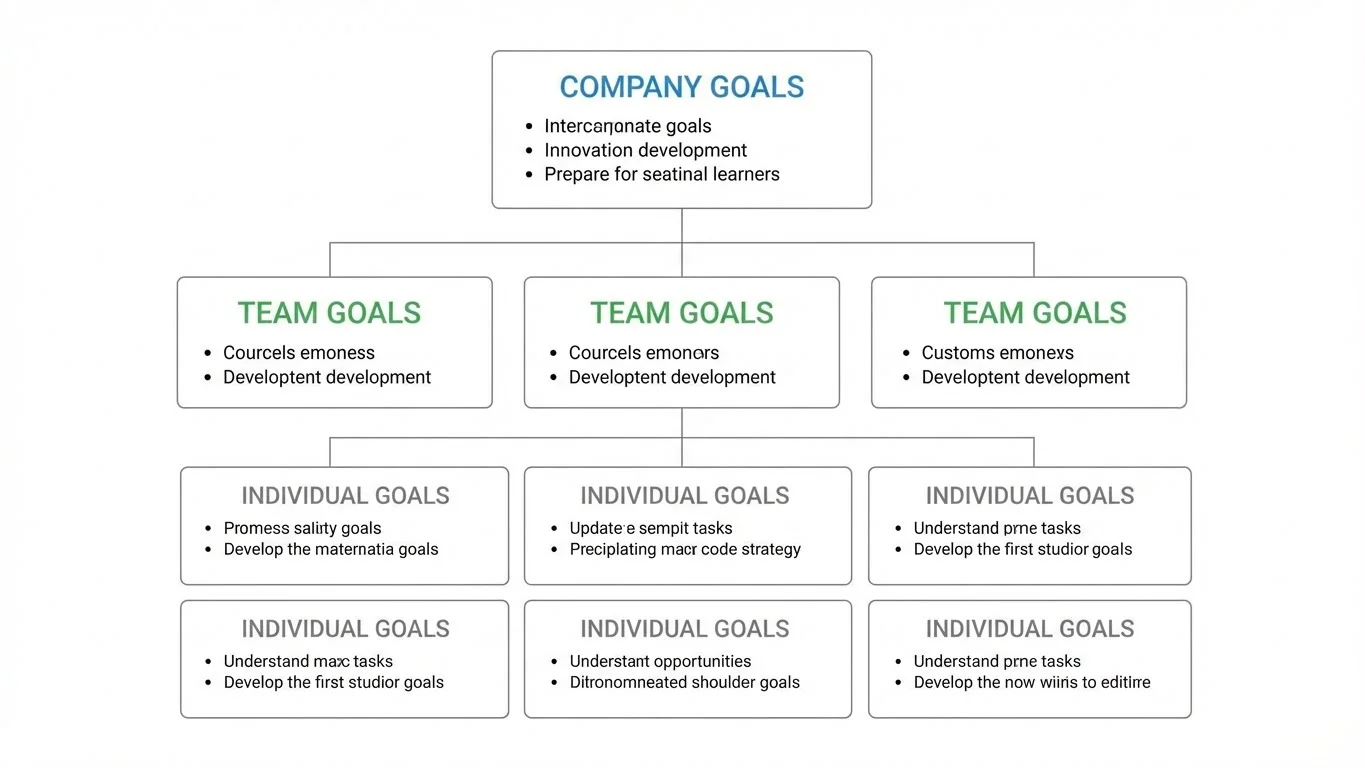
The structure of OKRs ensures alignment at different levels:
- Company-level OKRs define overall direction
- Team-level OKRs support company objectives
- Individual OKRs align with team goals
This cascading structure helps everyone work toward shared outcomes while maintaining clarity and accountability.
Why Are OKRs Important?
OKRs are important because they bring clarity and focus to goal-setting. Instead of working on disconnected tasks, teams understand priorities and how their work contributes to broader goals.
The importance of OKRs lies in:
- Clear alignment across teams
- Transparency in goals and progress
- Measurable performance tracking
- Better focus on high-impact work
By emphasizing outcomes over effort, OKRs help organizations evaluate real progress.
Benefits of Using OKRs in Organizations
Organizations that use OKRs consistently often see improved performance and alignment.
Key benefits include:
- Stronger alignment between strategy and execution
- Higher employee engagement due to clear expectations
- Improved accountability through measurable goals
- Faster decision-making based on visible progress
- Continuous improvement through regular reviews
These benefits make OKRs useful for both growing businesses and large organizations.
OKRs vs Other Goal-Setting Frameworks

OKRs vs KPIs
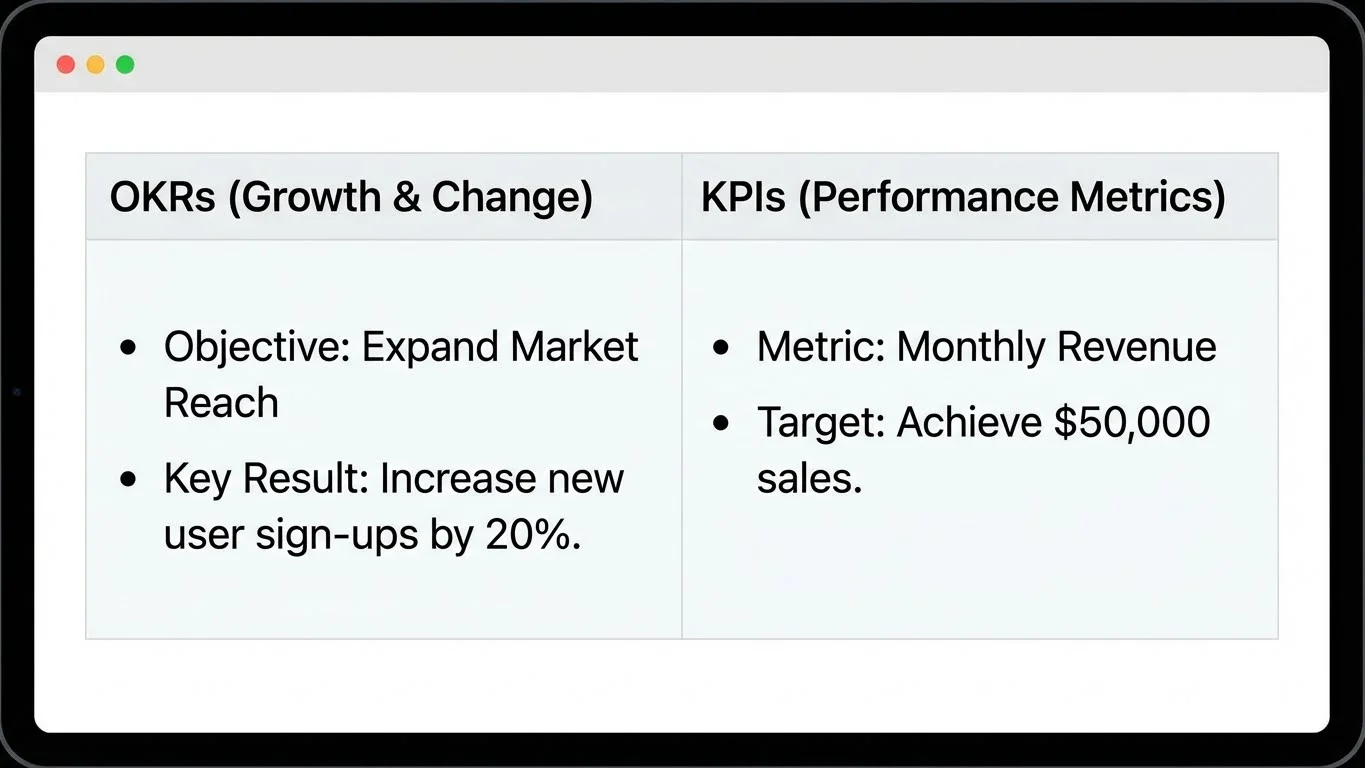
Key Performance Indicators (KPIs) measure how well an organization is performing in ongoing operations, while OKRs focus on driving change and improvement.
Main differences:
- KPIs track performance; OKRs drive progress
- KPIs are often long-term; OKRs are short-term
- KPIs measure health; OKRs set direction
OKRs vs SMART Goals
SMART goals focus on making goals specific and achievable, while OKRs emphasize alignment and ambitious outcomes.
Key differences include:
- SMART goals are often individual-focused
- OKRs align individuals, teams, and organizations
- OKRs allow ambitious targets even if not fully achieved
Examples of OKRs
Company-Level OKR Examples
Company-level OKRs focus on strategic outcomes.
Example:
- Objective: Improve overall customer satisfaction
- Key Results:
- Increase customer satisfaction score from 75 to 85
- Reduce average customer support response time by 30%
- Increase repeat customer rate by 15%
Team-Level OKR Examples
Team-level OKRs connect departmental work to company goals.
Marketing team example:
- Objective: Increase brand awareness
- Key Results:
- Increase website traffic by 40%
- Grow social media engagement by 25%
- Generate 500 qualified leads
Sales team example:
- Objective: Improve sales performance
- Key Results:
- Increase quarterly revenue by 20%
- Improve deal conversion rate from 18% to 25%
Individual OKR Examples
Individual OKRs focus on personal contribution and growth.
Example:
- Objective: Improve professional skills
- Key Results:
- Complete two relevant certifications
- Apply new skills in three projects
- Receive positive performance feedback
How to Write Effective OKRs
Writing effective OKRs requires clarity and discipline.
Steps to create strong OKRs:
- Define a clear and meaningful objective
- Choose two to five measurable key results
- Focus on outcomes rather than tasks
- Set a clear review timeline
Common mistakes to avoid:
- Writing vague objectives
- Using too many key results
- Tracking activities instead of results
Best Practices for Implementing OKRs Successfully
Successful OKR implementation depends on consistency and transparency.
Best practices include:
- Limit the number of OKRs to maintain focus
- Set ambitious but realistic targets
- Conduct regular progress check-ins
- Make OKRs visible across teams
- Use OKRs as a learning tool, not just an evaluation method
Common Challenges in OKR Implementation
Organizations may face challenges when adopting OKRs.
Common challenges include:
- Unclear or poorly defined objectives
- Key results that are difficult to measure
- Misalignment between teams
- Resistance to a new goal-setting approach
Addressing these issues early improves long-term success with OKRs.
Tools and Software for Managing OKRs
Many teams use tools to manage and track OKRs effectively.
Important features to look for:
- Progress tracking and reporting
- Alignment visibility across teams
- Regular check-in and update options
Smaller teams may use spreadsheets, while larger organizations often benefit from dedicated OKR software.
Who Should Use OKRs?
OKRs are suitable for a wide range of organizations and teams.
They are especially useful for:
- Startups seeking clarity and growth
- Mid-size companies scaling operations
- Large enterprises managing complex structures
- Remote and hybrid teams needing alignment
OKRs work best in environments that value transparency and measurable outcomes.
Conclusion
Objectives and Key Results (OKRs) offer a clear and structured way to set goals, measure progress, and align teams toward shared outcomes. By focusing on meaningful objectives and measurable results, OKRs help organizations stay focused, transparent, and adaptable. When implemented thoughtfully, OKRs become a powerful framework for driving performance and long-term success.