

Summary
Hiring a CEO is one of the most critical and expensive decisions a business will ever make. Whether you’re a high-growth startup, a mid-sized company, or an established enterprise, understanding how much it costs to hire a CEO is essential for financial planning, competitiveness, and long-term stability.
CEO compensation packages go far beyond base salaries. They include bonuses, equity, stock options, benefits, recruitment fees, relocation costs, and potential severance agreements. On top of this, factors such as industry type, company size, market conditions, and the CEO’s track record significantly influence the overall expense.
This detailed guide breaks down CEO hiring costs, explains what drives compensation levels, outlines hidden expenses companies often underestimate, and provides strategies to manage CEO pay responsibly — while still attracting the right leader for your organization.
Hiring a CEO is not like filling any other executive role. The CEO is the highest-ranking leader in a company, responsible for setting strategic direction, driving performance, guiding culture, and making decisions that influence every department. Because of the enormous responsibility the role carries, CEOs command compensation packages that reflect their impact.
In the UK and beyond, CEO compensation has been increasing steadily. Recent studies show that average CEO pay is 118 times higher than that of the average UK worker — highlighting just how competitive and expensive top leadership has become.
But how much does it cost to hire a CEO, and what exactly contributes to that cost? CEO hiring expenses extend far beyond salary and bonuses. Companies must also consider recruitment fees, onboarding, perks, equity agreements, and more.
Understanding all these components helps organizations plan strategically, negotiate wisely, and ensure that compensation aligns with business goals.
What is CEO Compensation
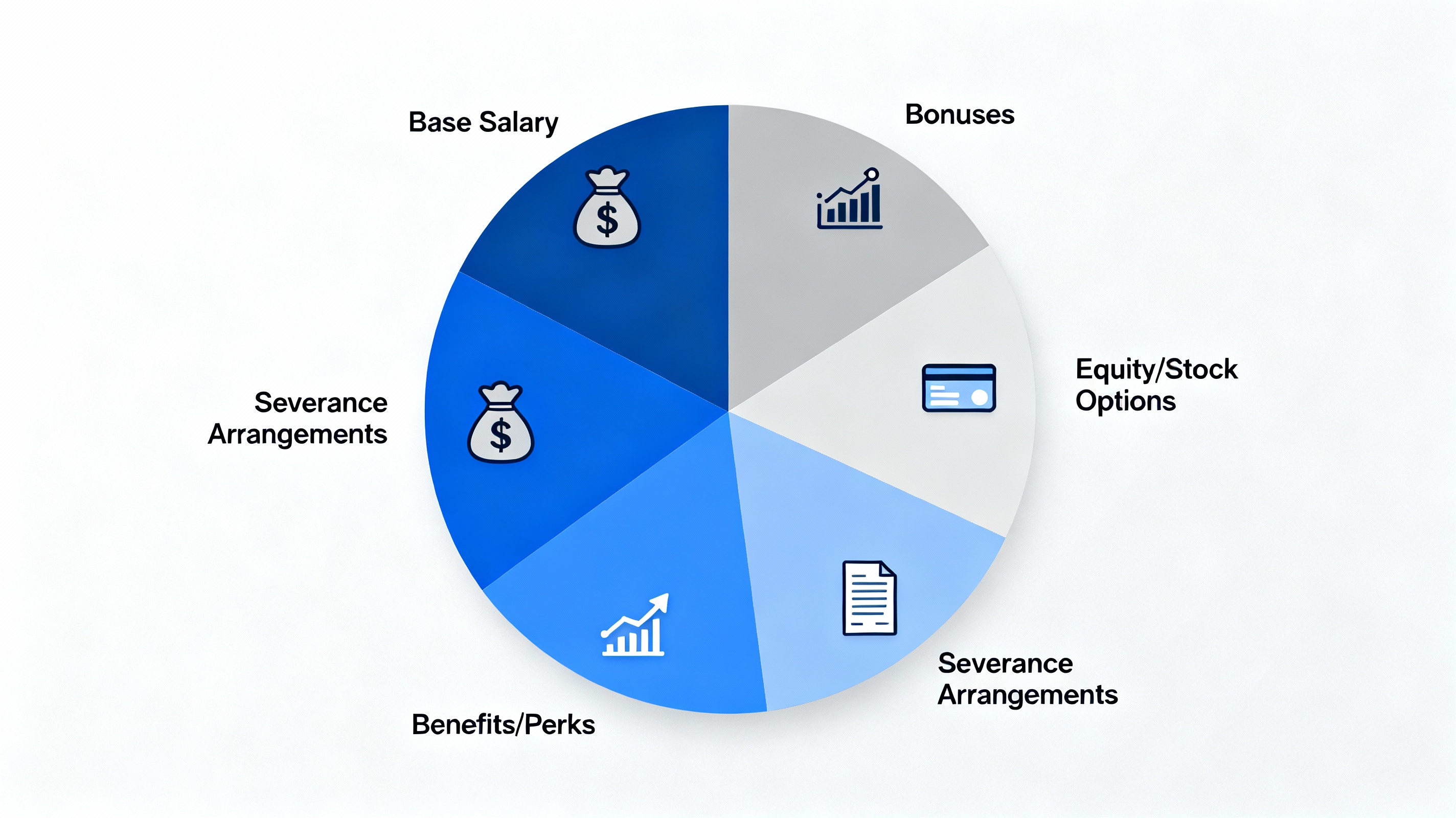
When companies ask how much does it cost to hire a CEO, the answer lies in understanding what CEO compensation actually includes.
CEO compensation refers to the complete financial package a company offers its chief executive officer. This typically includes:
- A fixed base salary
- Performance-based bonuses
- Short-term and long-term incentive plans
- Equity or stock options
- Benefits and perks
- Severance agreements
Compensation packages are designed to:
- Attract high-performing leaders
- Retain CEOs for the long term
- Encourage strong organizational results
- Align CEO goals with shareholder and company objectives
In today’s competitive executive talent market, failing to offer competitive CEO compensation can result in losing top candidates to rival companies.
Factors Influencing CEO Compensation
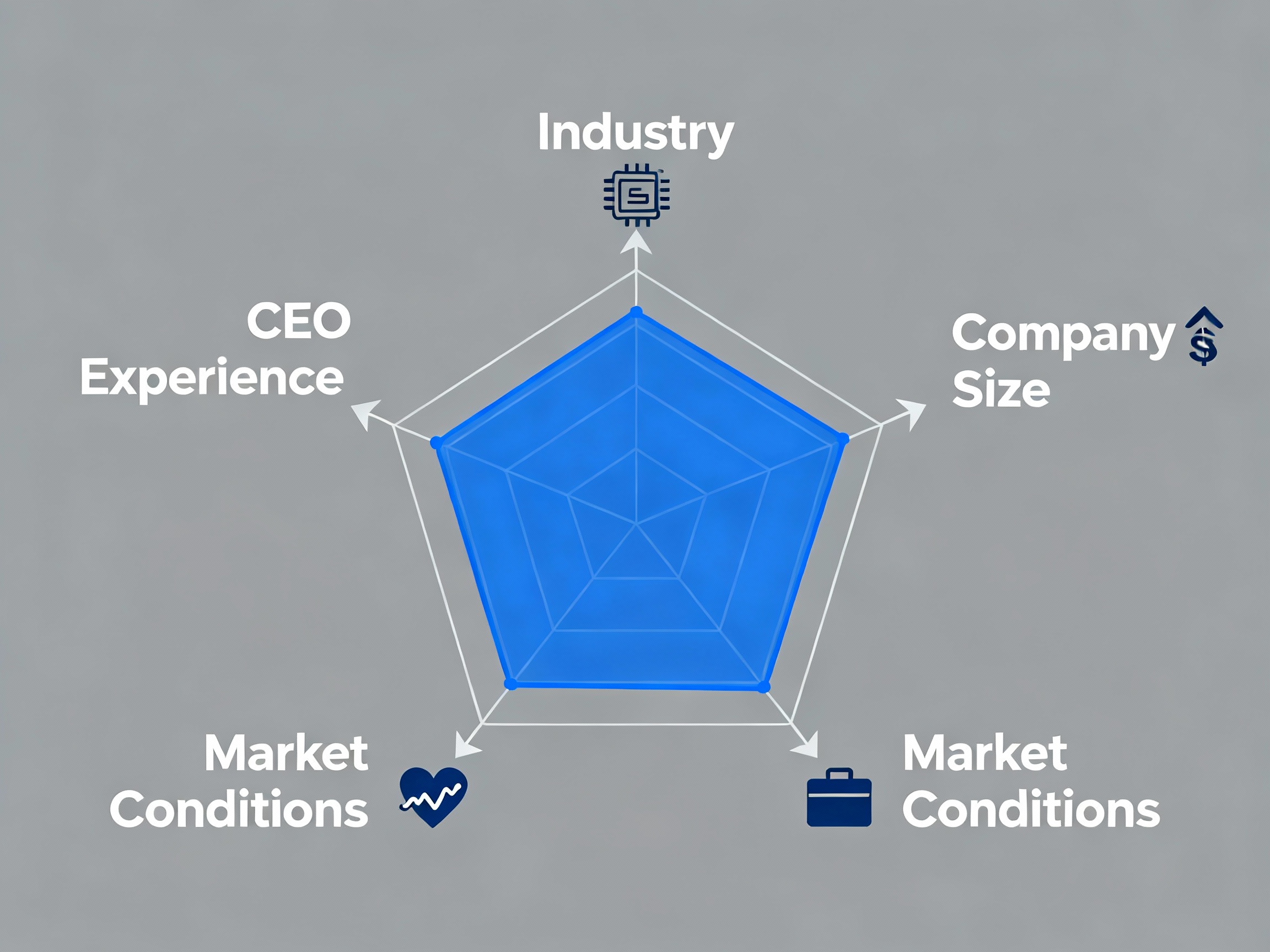
Several major factors determine how much it costs to hire a CEO. Understanding these helps businesses create fair and effective compensation packages.
1. Industry and Company Size
Industry plays a significant role in CEO pay levels. Some sectors require niche skills, heavy regulation knowledge, or high operational complexity — which commands higher salaries.
Examples:
- Finance, energy, and technology sectors typically offer the highest CEO compensation due to their competitive environments and scale.
- Nonprofits or public-sector organizations tend to offer lower compensation due to leaner budgets.
Company size also matters. Larger companies have:
- More employees
- Greater risk
- More revenue
- Higher operational complexity
This results in larger compensation packages to attract CEOs capable of managing such scale.
A reference point: The median FTSE 100 CEO salary in 2022 reached £3.91 million, demonstrating how CEO pay tends to scale with company size and influence.
2. Company Performance and Market Conditions
Many CEO compensation packages include performance-based bonuses tied to:
- Revenue growth
- Profit margins
- Shareholder returns
- Operational efficiency
- Company valuation increases
Stronger company performance generally leads to higher CEO earnings.
Market conditions also influence compensation. During periods of economic growth, CEO bonuses tend to rise. During downturns, companies may restructure compensation toward stock options or deferred bonuses.
Also Read: How to Find the Right CEO to Lead Your Company to Success
3. CEO Experience and Track Record
A CEO with a strong history of:
- Scaling businesses
- Leading successful turnarounds
- Increasing revenue
- Managing global teams
- Building high-performance cultures
will command higher compensation packages.
Companies are willing to pay more for a leader with a proven record of delivering results.
Experienced CEOs also negotiate more attractive benefits, equity packages, and severance terms.
4. Benchmarking Against Market Standards
Most organizations benchmark CEO pay using external compensation reports to stay competitive. Without benchmarking:
- Companies risk paying too much — hurting profitability.
- Or too little — failing to attract qualified CEOs.
Benchmarking ensures compensation remains fair, transparent, and aligned with industry norms.
Components of CEO Compensation
When companies evaluate how much it costs to hire a CEO, they must understand the different components that make up total compensation.
1. Base Salary
This is the fixed portion of CEO pay, usually paid monthly or annually.
While base salary is important, it often represents only 10–30% of total compensation, especially in large companies.
2. Bonuses and Incentive Plans
These are variable components tied to performance.
They come in two forms:
Short-term bonuses:
- Tied to quarterly or annual targets
- Based on financial or operational KPIs
Long-term incentives:
- Multi-year performance rewards
- Encourage CEO retention and strategic growth
Performance bonuses can sometimes exceed base salary, depending on company success.
3. Equity and Stock Options
Equity is one of the most valuable components of CEO compensation.
It includes:
- Stock options
- Restricted stock units (RSUs)
- Performance shares
- Ownership shares
Equity aligns CEO interests with shareholder goals, encouraging:
- Long-term value creation
- Strategic decision-making
- Organizational stability
Because stock values can grow significantly, equity can drastically increase the real cost of hiring a CEO.
4. Benefits and Perquisites (Perks)
CEOs often receive a wide range of perks designed to support their lifestyle and responsibilities. These may include:
- Health insurance
- Company car or travel allowances
- Private jets
- Retirement and pension plans
- Security services
- Expense accounts
- Housing allowances
- Club memberships
These perks add significant value to compensation packages.
5. Deferred Compensation & Exit Packages
Some companies offer:
- Deferred salaries
- Long-term incentive plans
- Retirement bonuses
Additionally, many CEOs negotiate severance packages, sometimes called “golden parachutes,” which guarantee payment if they are terminated or replaced.
Average Costs of Hiring a CEO
CEO compensation varies significantly across industries and geographic locations.
1. Comparison Across Industries
Examples:
- Finance and tech CEOs often have packages worth several million pounds annually.
- Manufacturing or retail industries typically offer smaller but still competitive packages.
- Small and mid-sized companies may offer lower salaries but include attractive equity stakes.
The competitive nature of some industries pushes CEO pay higher due to:
- Scarce executive talent
- Complex regulatory environments
- Global competition
2. Geographic Location
CEO salaries are typically highest in:
- Major metropolitan cities
- International business hubs
- High cost-of-living regions
For example, London-based CEOs often earn more than those in smaller UK cities.
Similarly, CEOs in New York and Silicon Valley command much higher salaries than CEOs in other regions.
Hidden Costs of CEO Compensation
When answering how much does it cost to hire a CEO, companies must consider several hidden expenses beyond salary and bonuses.
1. Recruitment Fees
Most CEOs are hired through executive search firms specializing in high-level placements.
These firms typically charge 20–35% of the CEO’s first-year salary — a significant cost.
2. Relocation Expenses
If the chosen CEO is hired from elsewhere, the company may pay for:
- Moving costs
- Temporary accommodation
- Flights
- Family relocation
- Schooling support
These expenses add up quickly.
3. Severance Packages
Many CEO contracts include pre-negotiated severance terms triggered in cases such as:
- Company restructuring
- Mergers or acquisitions
- Performance issues
- Leadership transitions
Severance can range from months to multiple years of salary and bonuses.
4. Onboarding and Transition Costs
These may include:
- Leadership coaching
- Strategy workshops
- Executive integration programs
- Management team restructuring
A CEO transition can be disruptive, and onboarding must be handled carefully.
Strategies for Managing CEO Compensation Costs
Companies often wonder how to attract top talent while keeping costs sustainable.
Here are effective strategies for balancing competitiveness and financial control:
1. Set Clear Performance Targets
Link compensation to measurable results:
- Profitability
- Revenue growth
- Operational improvements
- Shareholder value
This holds CEOs accountable for delivering value.
2. Use Regular Benchmarking
Benchmark CEO pay against industry competitors to ensure fairness and prevent overpaying.
Benchmarking also maintains credibility with employees and shareholders.
3. Utilize Long-Term Incentives
Instead of high upfront pay, companies may offer:
- Equity plans
- Deferred bonuses
- Performance-based options
This aligns CEO motivation with long-term success while reducing immediate cash outflow.
- Strengthen the Hiring Process
A robust hiring process ensures:
- The right leader is selected
- Culture fit is prioritized
- Turnover risk is minimized
Reducing turnover lowers re-hiring and severance costs.
The Financial Impact of CEO Hiring
CEO compensation has a direct effect on:
- The company’s financial health
- Shareholder perceptions
- Investor confidence
- Employee morale
Overpaying a CEO can damage public image, while underpaying may result in losing high-demand candidates.
Finding the right balance is crucial — companies need leadership that delivers value without straining resources.
Conclusion
Hiring a CEO is a major financial commitment and a decision that shapes a company’s future.
Understanding how much it costs to hire a CEO requires evaluating more than salaries — businesses must consider bonuses, equity, perks, hiring fees, relocation, severance, and long-term incentives.
Key points to remember:
- Industry, company size, and performance heavily influence CEO pay.
- Compensation packages must align CEO goals with business objectives.
- Hidden costs such as recruitment fees and severance agreements can be substantial.
- Effective strategies like performance-based incentives and benchmarking help manage costs.
By approaching CEO hiring strategically, companies can secure top leadership while maintaining financial stability and fairness.
FAQs
How much does it cost to hire a CEO?
The cost varies widely depending on industry, company size, the CEO’s experience, and market conditions. For large companies, total compensation can reach millions annually, including salary, bonuses, equity, and perks.
What factors influence CEO compensation?
Industry type, company size, performance targets, market conditions, and the CEO’s experience all play significant roles.
What is included in a CEO compensation package?
Base salary, bonuses, long-term incentives, stock options, benefits, perks, and severance agreements.
What are the hidden costs of hiring a CEO?
Recruitment agency fees, relocation expenses, onboarding programs, and severance packages often contribute to total cost.
Do CEO salaries vary by location?
Yes. CEOs in major business hubs or high cost-of-living cities generally earn more due to increased competition and greater business demands.
How can companies manage CEO compensation costs?
By setting performance-based targets, benchmarking salaries, offering long-term incentives, and ensuring a thorough hiring process.