
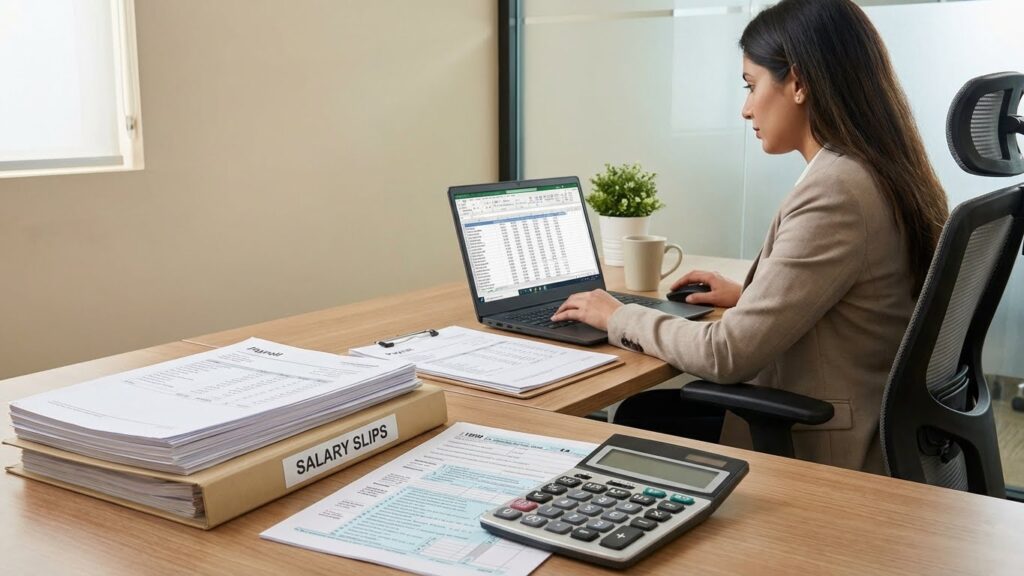
Payroll is one of the most sensitive and important functions in any organization. It directly affects employees, government compliance, and a company’s financial health. Even small payroll errors can lead to employee dissatisfaction, penalties, or legal issues. A payroll audit helps businesses review their payroll processes in a systematic way to ensure accuracy, compliance, and transparency. In this guide, you will learn what a payroll audit is, why it matters, how it is done, and see practical examples to understand its real-world importance.
What Is a Payroll Audit?
A payroll audit is a detailed review of a company’s payroll records, processes, and systems to ensure that employees are paid correctly and that all payroll-related laws and regulations are followed. It focuses on verifying wages, deductions, taxes, benefits, and employee classifications.
A payroll audit helps identify errors, inconsistencies, or risks in payroll operations before they turn into serious problems. Unlike a general financial audit, which looks at overall financial statements, a payroll audit concentrates only on payroll-related activities.
Payroll audits can be performed by internal teams, such as HR or finance departments, or by external auditors who provide an independent review.
Why Is a Payroll Audit Important?

A payroll audit plays a critical role in protecting both the business and its employees. It ensures that payroll operations are accurate, lawful, and well-controlled.
- Helps maintain compliance with labor laws and tax regulations
- Reduces the risk of fines, penalties, and legal disputes
- Ensures employees are paid correctly and on time
- Detects payroll fraud, such as ghost employees or duplicate payments
- Improves trust between employees and management
- Supports accurate financial reporting and budgeting
Types of Payroll Audits

Payroll audits can be conducted in different ways, depending on the purpose and scope of the review.
- Internal payroll audit
Conducted by in-house teams to regularly check payroll accuracy and controls. - External payroll audit
Performed by third-party auditors to provide an independent assessment. - Compliance-focused payroll audit
Ensures adherence to labor laws, wage regulations, and statutory requirements. - Tax and statutory payroll audit
Reviews payroll tax calculations, deductions, and government filings. - Technology- or system-based payroll audit
Evaluates payroll software, automation tools, and data security controls.
When Should a Payroll Audit Be Conducted?

Payroll audits can be scheduled regularly or conducted when specific situations arise. The timing depends on business size, complexity, and regulatory exposure.
- Periodic audits conducted monthly, quarterly, or annually
- After changes in payroll software or service providers
- During business expansion, mergers, or restructuring
- When labor laws or tax regulations change
- After employee complaints or payroll disputes
- When government notices, inspections, or inquiries are received
Key Payroll Components Reviewed During a Payroll Audit
A payroll audit examines several core payroll elements to ensure everything is accurate and compliant.
- Employee classification (full-time, part-time, contract workers)
- Wage and salary structures
- Overtime calculations and allowances
- Payroll taxes and statutory deductions
- Benefits, bonuses, and incentives
- Leave balances, attendance, and time-tracking records
- Final settlements and termination payments
Payroll Audit Process: Step-by-Step

The payroll audit process follows a structured approach to ensure a thorough and reliable review.
- Step 1: Define the scope and objectives of the payroll audit
Determine which payroll periods, employees, and compliance areas will be reviewed. - Step 2: Collect payroll data and supporting documents
Gather payroll registers, attendance records, tax filings, contracts, and policy documents. - Step 3: Verify employee records and classifications
Check employee details, job roles, and classification accuracy. - Step 4: Review wage calculations and deductions
Confirm salary calculations, overtime, bonuses, and deductions are correct. - Step 5: Check payroll tax compliance and filings
Review tax rates, deductions, and timely submission of statutory payments. - Step 6: Identify discrepancies, errors, or risks
Compare records to detect inconsistencies, gaps, or control weaknesses. - Step 7: Prepare audit findings and recommendations
Document issues, root causes, and corrective actions. - Step 8: Implement corrective actions and controls
Fix errors and improve payroll processes to prevent future issues.
Payroll Audit Checklist
A payroll audit checklist helps ensure no critical area is overlooked during the review.
- Verification of employee master data
- Validation of time and attendance records
- Accuracy checks for salary, overtime, and allowances
- Review of tax deductions and statutory compliance
- Confirmation of benefits, reimbursements, and bonuses
- Payroll reconciliation with bank payment records
- Review of payroll documentation and record retention
Common Payroll Audit Errors and Risks
Payroll audits often uncover recurring issues that can expose businesses to financial and legal risks.
- Incorrect employee classification
- Errors in overtime or leave calculations
- Missed or delayed tax payments
- Manual data entry mistakes
- Incomplete or missing payroll documentation
- Weak approval and internal control processes
Payroll Audit Examples (Real-World Scenarios)
Payroll audit examples help illustrate how audits identify and resolve payroll issues.
- Example 1: Identifying overtime miscalculations
An audit reveals overtime hours were calculated using incorrect rates, leading to underpayments. - Example 2: Detecting incorrect employee classification
Contract workers were misclassified, resulting in compliance risks and incorrect benefits. - Example 3: Resolving tax deduction and filing errors
Payroll taxes were deducted correctly but not deposited on time, creating penalty exposure. - Example 4: Uncovering duplicate or ghost employees
Audit checks identify inactive employees still receiving payments. - Example 5: Correcting payroll discrepancies after system migration
Data mismatches occur after switching payroll software and are resolved through reconciliation.
Payroll Audit Tools and Software
Modern payroll audits are supported by digital tools that improve accuracy and efficiency.
- Payroll management systems
- Time and attendance tracking tools
- Audit and compliance software
- Reporting and reconciliation tools
- Automation tools that reduce manual errors and improve data consistency
Best Practices for a Successful Payroll Audit
Following best practices helps ensure payroll audits deliver meaningful and reliable results.
- Maintain accurate and updated payroll records
- Standardize payroll procedures and approval workflows
- Use automation to minimize manual errors
- Conduct regular internal payroll reviews
- Stay informed about labor laws and tax regulations
- Train payroll and HR teams on compliance requirements
How Often Should a Payroll Audit Be Conducted?
The frequency of payroll audits depends on business size, industry, and regulatory requirements.
- Small businesses may conduct annual payroll audits
- Mid-sized organizations often perform quarterly audits
- Large enterprises may require monthly or continuous audits
- Highly regulated industries may need more frequent reviews
Payroll Audit vs. Payroll Review
While often confused, payroll audits and payroll reviews serve different purposes.
- Payroll audits are detailed, formal, and compliance-focused
- Payroll reviews are less detailed and focus on general accuracy
- Audits are usually documented and structured
- Reviews are often informal and used for quick checks
- Audits are preferred for regulatory or risk-related concerns
Conclusion
A payroll audit is a vital process that helps businesses ensure payroll accuracy, compliance, and transparency. By regularly reviewing payroll records, systems, and controls, organizations can reduce risks, improve employee trust, and avoid costly errors. Whether conducted internally or externally, a well-planned payroll audit supports long-term financial stability and compliance. Making payroll audits a regular practice helps businesses stay prepared, compliant, and confident in their payroll operations.