
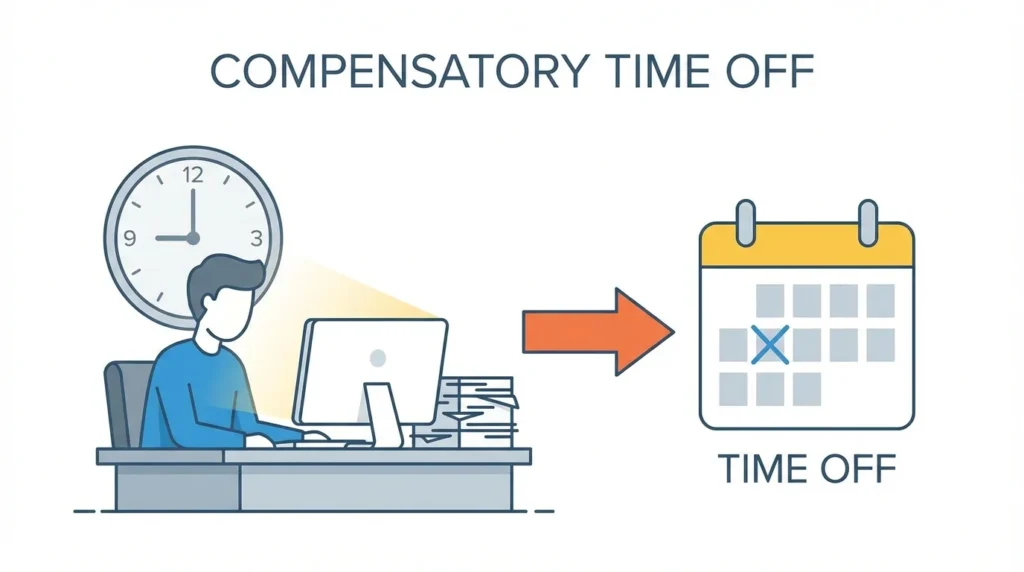
In many workplaces, employees sometimes need to work more than their normal working hours. This can happen during busy seasons, urgent projects, emergencies, or tight deadlines. When employees work extra hours, companies usually compensate them in different ways. The most common method is overtime pay, where employees receive additional wages for the extra time they worked.
However, some organizations use another method called compensatory time off, often referred to as comp time. Instead of paying employees for overtime hours, the employer allows them to take paid time off later. This system can help employees recover from long working hours while giving employers more flexibility in managing schedules.
Compensatory time off is commonly used in certain sectors, especially in government or public organizations. However, the rules around comp time can vary depending on labor laws, company policies, and employee classifications. Because of this, both employees and employers should understand how comp time works and what regulations apply.
In this guide, you will learn what compensatory time off means, how it works, the rules governing it, and examples of how companies and organizations apply it in real work situations.
What Is Compensatory Time Off?
Compensatory time off is a type of employee benefit where workers receive paid time off instead of overtime pay for the extra hours they work. In simple terms, when an employee works beyond their normal working hours, they can accumulate those extra hours as leave that they can use later.
Comp time is designed to compensate employees for their additional work while giving them the opportunity to rest or attend personal matters. Instead of receiving additional wages, employees are granted time off that matches the overtime hours they have earned.
Many organizations use compensatory time to provide flexibility to their workforce. This system allows employees to recover from demanding work periods and maintain a better balance between their professional and personal lives.
Key aspects of compensatory time off include:
- It is earned by working extra hours beyond the regular work schedule
- The extra hours are converted into paid leave
- Employees can use the accumulated hours at a later time
- The employer usually needs to approve when the employee takes the leave
- Policies for earning and using comp time are usually defined in company rules or labor regulations
It is important to note that compensatory time off is different from standard paid leave benefits such as vacation days or sick leave. Comp time is specifically earned as compensation for overtime work.
How Compensatory Time Off Works
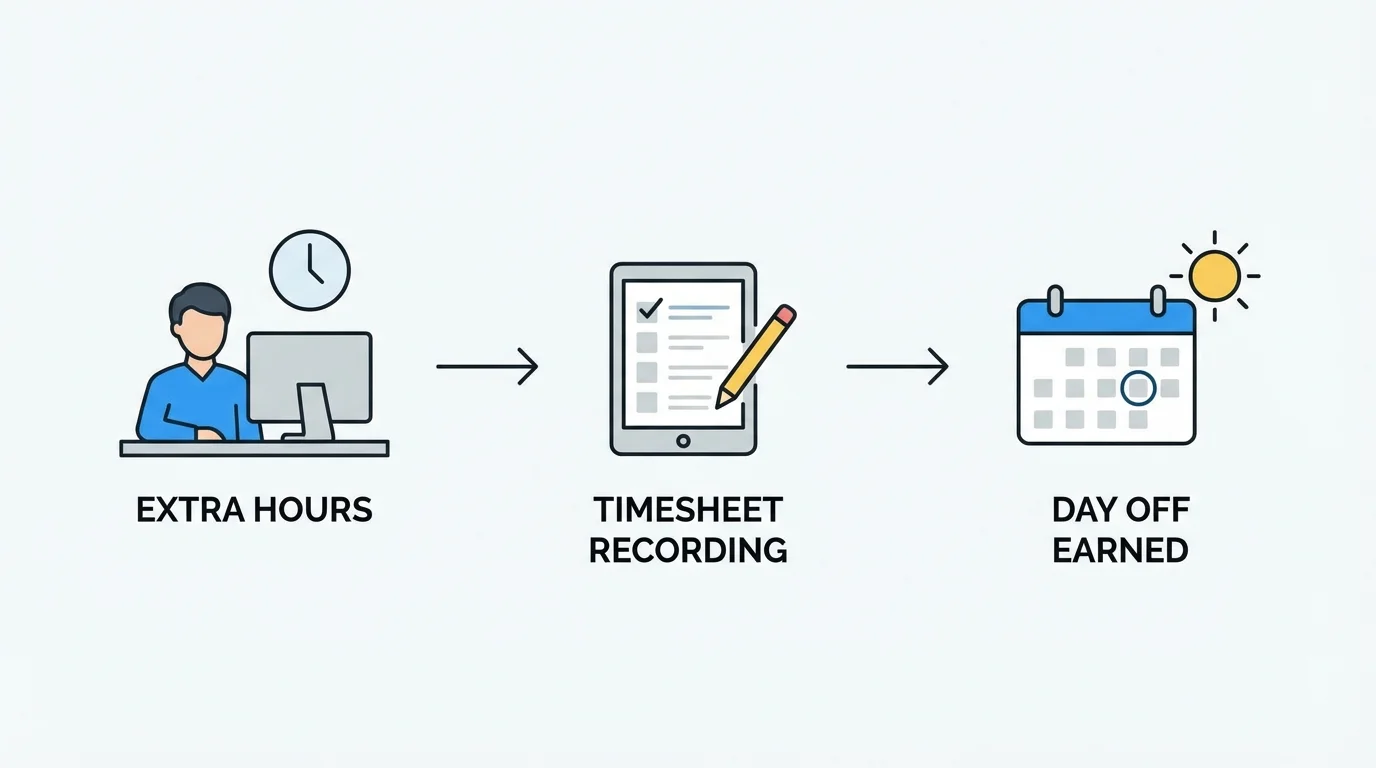
Compensatory time off works through a simple process. When employees work additional hours beyond their normal schedule, those extra hours are recorded and later converted into paid time off. This allows employees to take time away from work without losing pay.
The process usually follows a structured system managed by the employer or the human resources department.
- Earning comp time by working extra hours Employees earn compensatory time when they work more hours than their regular schedule. For example, if an employee works several extra hours to complete a project or attend a meeting outside normal working hours, those hours may qualify as comp time.
- Converting overtime hours into time off Once the extra hours are recorded, they are converted into compensatory time off. In some workplaces, employees earn one hour of comp time for every extra hour worked. In other cases, the conversion may follow overtime rules where employees earn additional time off based on overtime rates.
- Tracking and recording comp time Employers usually track comp time through time-tracking systems, attendance records, or payroll software. Accurate tracking helps ensure that employees receive the correct amount of leave for the overtime they worked.
- Approval process for using comp time Employees generally need approval from their managers before taking compensatory time off. This ensures that work schedules remain balanced and that important tasks are still covered while the employee is away.
- Expiration or limits on comp time Many organizations set limits on how much comp time employees can accumulate. In some cases, employees must use the earned time within a certain period. If the comp time is not used within the allowed timeframe, the employer may convert it into overtime pay or remove unused hours according to company policies.
Compensatory Time Off Rules
The rules for compensatory time off are not the same for every workplace. In many countries, labor laws regulate when and how comp time can be used. These rules are often stricter in the private sector and more flexible in the public sector.
Public Sector Rules
Compensatory time off is commonly allowed for government employees and public sector workers. Many public organizations use comp time as an alternative to overtime payments.
Key rules often include:
- Eligibility for government employees Public sector employees may receive compensatory time off if their job roles require them to work additional hours beyond their regular schedule. The eligibility criteria are usually defined in government employment policies.
- Overtime calculation for comp time In some government workplaces, compensatory time is calculated using overtime rates. This means employees may earn more than one hour of leave for every extra hour worked, depending on the rules in place.
- Maximum comp time limits Public sector policies often set limits on how many comp time hours an employee can accumulate. These limits help prevent excessive accumulation of leave.
- Deadlines for using earned comp time Employees may be required to use their comp time within a specific period. If the leave is not used within that timeframe, organizations may convert the hours into overtime pay or follow other compensation policies.
Private Sector Rules
In the private sector, the use of compensatory time off is often restricted by labor laws in many countries. In many cases, employers are required to pay overtime wages instead of offering comp time to non-exempt employees.
Common considerations include:
- Regulations for private employers Labor laws in several regions require employers to provide overtime pay for eligible employees who work more than standard working hours.
- Legal limitations in many countries Some laws restrict private companies from replacing overtime pay with compensatory time off. This is particularly true for employees who qualify for overtime protections under labor regulations.
- Alternative policies companies may follow Some companies may offer flexible scheduling or additional leave policies for certain employees. However, these policies must still comply with labor regulations.
Because employment laws vary, organizations must carefully design their policies to remain compliant with applicable labor standards.
Compensatory Time Off vs Overtime Pay
Compensatory time off and overtime pay are both methods used to compensate employees for working extra hours. However, they function in different ways and may apply under different circumstances.
Key differences include:
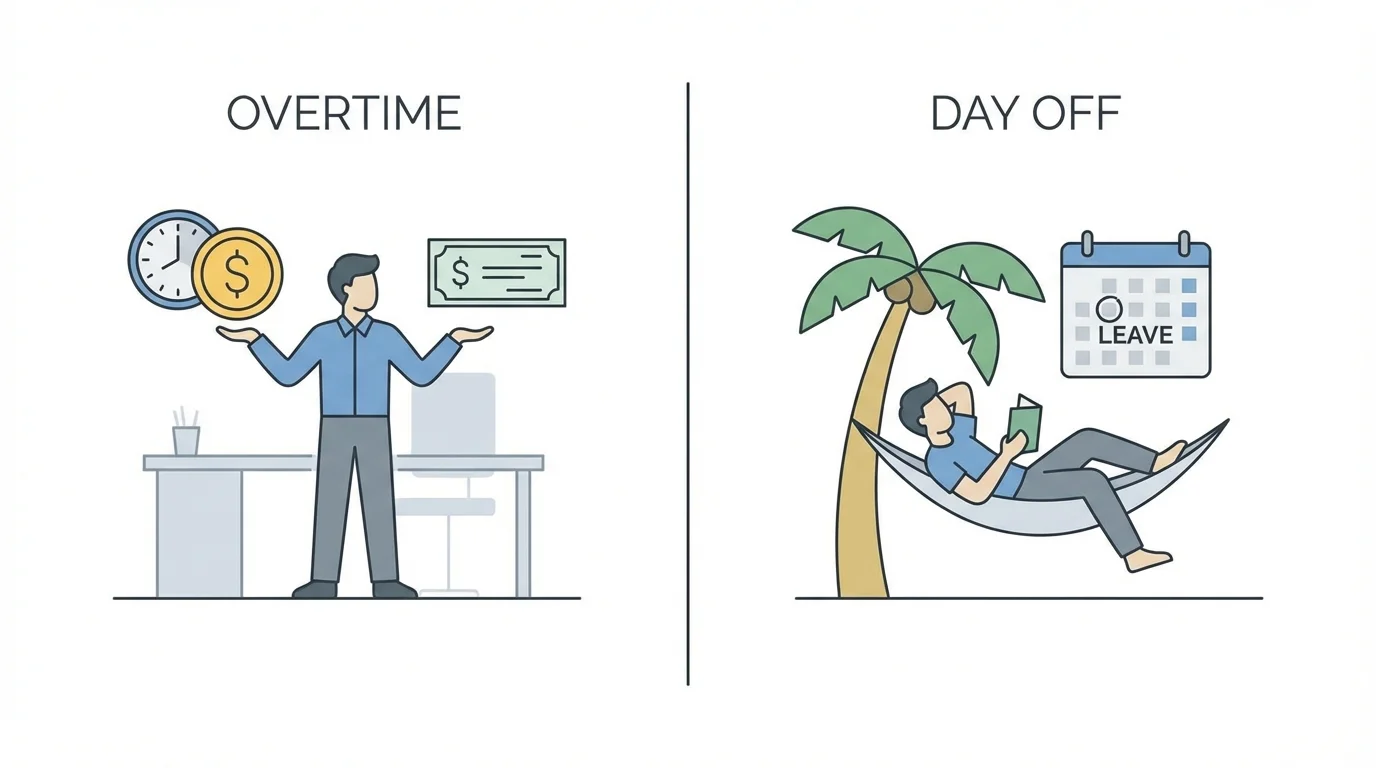
- Form of compensation Overtime pay compensates employees with additional wages for the extra hours worked. Compensatory time off provides paid leave instead of additional pay.
- Timing of the benefit Overtime pay is usually provided in the employee’s paycheck shortly after the overtime work is completed. Comp time allows employees to receive the benefit later by taking time off.
- Workplace policies and legal rules Overtime pay is often required by labor laws for certain employees. Compensatory time off may only be allowed under specific conditions or in certain sectors.
- Employee preference and flexibility Some employees prefer overtime pay because it increases their income. Others prefer comp time because it gives them additional rest or personal time.
- Situations where comp time may not be allowed In many workplaces, especially in the private sector, labor regulations may require employers to provide overtime pay instead of comp time.
Understanding the difference between these two forms of compensation helps employees know what they are entitled to and helps employers maintain compliance with labor laws.
Benefits of Compensatory Time Off
Compensatory time off can provide several advantages for both employees and employers when used appropriately. It offers flexibility and can improve overall workplace satisfaction.
Benefits for Employees
Comp time can help employees manage their workload and personal life more effectively.
- Better work-life balance Employees who work long hours can use compensatory time to rest and recover. This helps maintain a healthier balance between work and personal responsibilities.
- Flexible time off options Comp time gives employees the opportunity to choose when they want to take their leave, depending on company policies and approval.
- Reduced burnout Taking time off after periods of intense work can help reduce fatigue and stress, improving employee well-being and productivity.
Benefits for Employers
Employers can also benefit from using compensatory time off as part of their workforce management strategy.
- Reduced payroll costs Providing time off instead of overtime pay may help organizations manage payroll expenses, depending on the policies and regulations that apply.
- Improved employee satisfaction Offering comp time can show employees that the organization values their effort and recognizes the additional hours they worked.
- Increased flexibility in scheduling Employers can manage workloads and staffing schedules more effectively when employees use comp time during less busy periods.
Challenges of Compensatory Time Off

Although compensatory time off can offer benefits, it also comes with certain challenges that organizations must address.
Common challenges include:
- Tracking and managing comp time hours Employers must maintain accurate records of overtime hours and comp time balances. Without proper tracking systems, mistakes or disputes may occur.
- Legal compliance issues Companies must ensure that their comp time policies follow labor laws. Failing to comply with legal requirements can lead to penalties or disputes.
- Employees delaying time off Some employees may continue accumulating comp time without taking leave. This can create scheduling difficulties later when they want to use a large amount of time off.
- Possible misuse or misunderstanding of policies If policies are not clearly communicated, employees may misunderstand how comp time works, which can lead to confusion or conflicts.
Organizations must address these challenges by creating clear policies and maintaining transparent communication with employees.
Examples of Compensatory Time Off
Real workplace situations can help explain how compensatory time off is applied.
Example 1: Government Employee
A government employee may work additional hours during an emergency project or during peak periods of public service. Instead of receiving overtime pay, the employee may earn compensatory time that can be used as paid leave later.
Example 2: Weekend Work
An employee may be required to work during a weekend or public holiday to handle urgent tasks or operational needs. In this case, the employer may grant equivalent time off during regular working days as compensation for the extra hours worked.
Example 3: Project Deadline
A team working on a major project may need to stay late for several days to meet a deadline. After the project is completed, the employer may allow employees to use the accumulated comp time as leave to recover from the extended work hours.
These examples show how compensatory time off can help balance workload demands with employee well-being.
Best Practices for Managing Compensatory Time Off
Organizations that offer compensatory time off should implement clear and structured management practices to ensure fairness and compliance.
Important practices include:
- Clear comp time policy Employers should create written policies explaining how employees earn comp time, how it can be used, and any limits that apply.
- Accurate time tracking systems Using reliable time-tracking tools helps organizations record overtime hours accurately and prevent disputes.
- Communication between managers and employees Managers should regularly communicate with employees about comp time balances and scheduling options.
- Setting limits for comp time accumulation Organizations may set limits on how much comp time employees can accumulate to prevent large backlogs of unused leave.
- Ensuring compliance with labor laws Employers must review labor regulations regularly to ensure that their comp time policies meet legal requirements.
Frequently Asked Questions
Is compensatory time off the same as paid time off?
Compensatory time off is different from standard paid time off. Paid time off includes vacation days, personal leave, or sick leave that employees receive as part of their benefits package. Comp time is specifically earned by working extra hours beyond the regular schedule.
Can comp time expire?
In some organizations, compensatory time must be used within a certain timeframe. If employees do not use the leave before the deadline, the employer may follow company policies or applicable labor rules regarding unused hours.
Who qualifies for compensatory time?
Eligibility for comp time depends on workplace policies, job roles, and labor regulations. Some sectors, particularly public sector jobs, commonly offer compensatory time off.
Can private companies offer comp time?
Private companies may offer flexible leave policies, but they must follow labor laws regarding overtime compensation. In many cases, employers are required to provide overtime pay for eligible employees.
What happens if comp time is not used?
If compensatory time is not used within the allowed timeframe, the employer may apply company policies or labor rules to address unused hours. This may include converting the hours into overtime pay or removing unused balances according to regulations.
Conclusion
Compensatory time off is a system that allows employees to receive paid time off instead of overtime pay when they work extra hours. It provides an alternative way for organizations to compensate employees while giving workers the opportunity to rest and maintain a healthier work-life balance.
Understanding how comp time works is important for both employees and employers. Employees need to know how they earn and use their compensatory time, while employers must ensure that their policies follow labor regulations and remain fair to their workforce.
When managed properly, compensatory time off can support employee well-being, improve workplace flexibility, and help organizations manage workloads effectively.